Friedrich der Große: What Made Prussia’s Frederick II So Great
by Pauline Park
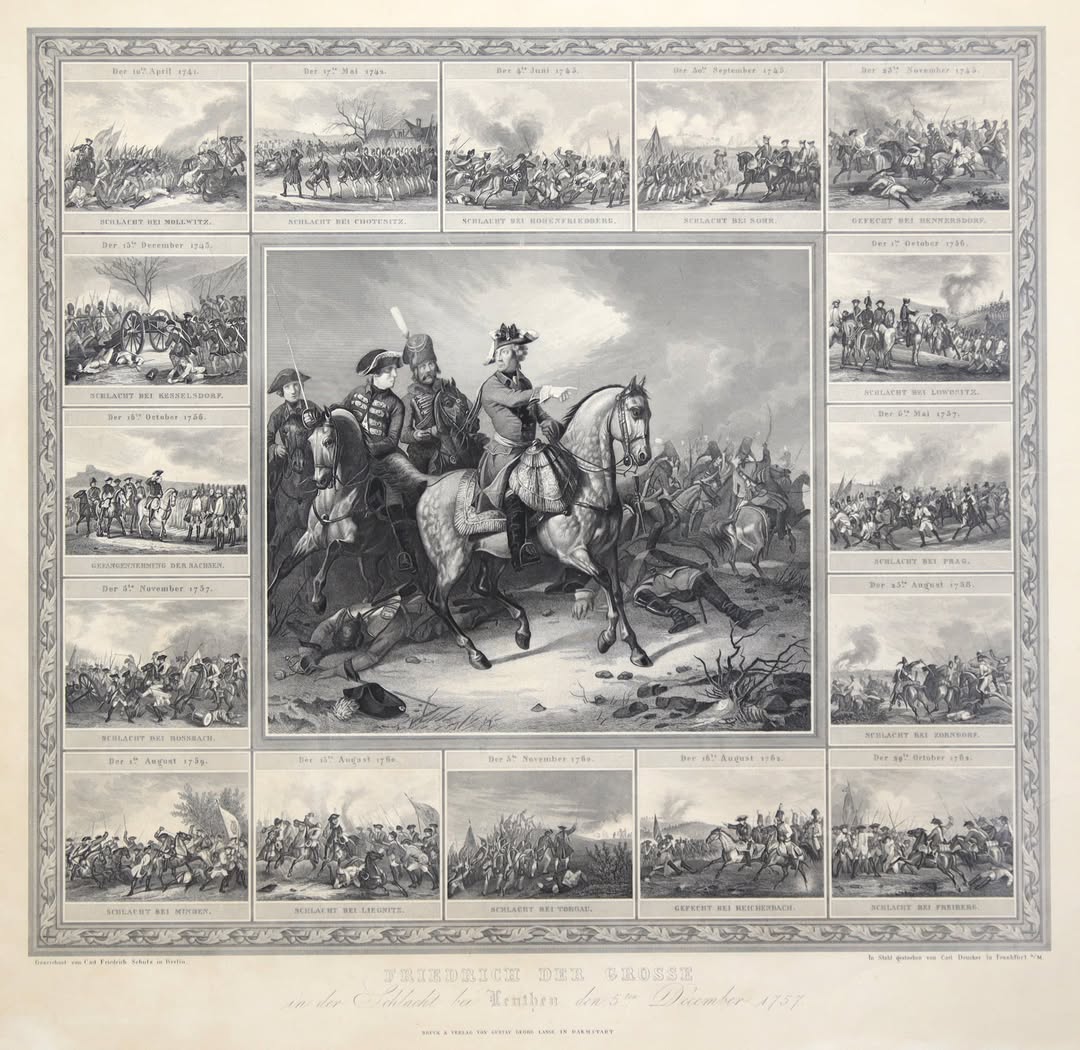
Frederick II has gone down in history as ‘Friedrich der Große’; but was he really so great? And if he was what made him so…?
If you ask a hundred Americans to name a single Prussian ruler, it’s likely the only one they would be able to name (if any) would be Frederick II, though it’s not likely they would know of the ‘2nd’ nomenclature; but three centuries after Der Alte Fritz’s legendary exploits, his name still rings a bell with Americans and Europeans even if few non-Germans would be familiar with his father the odious Friedrich Wilhelm or his illustrious grandfather, Friedrich ‘der Große Kurfüst’ (the Great Elector), who paved the way for Friedrich II’s astonishing reign.
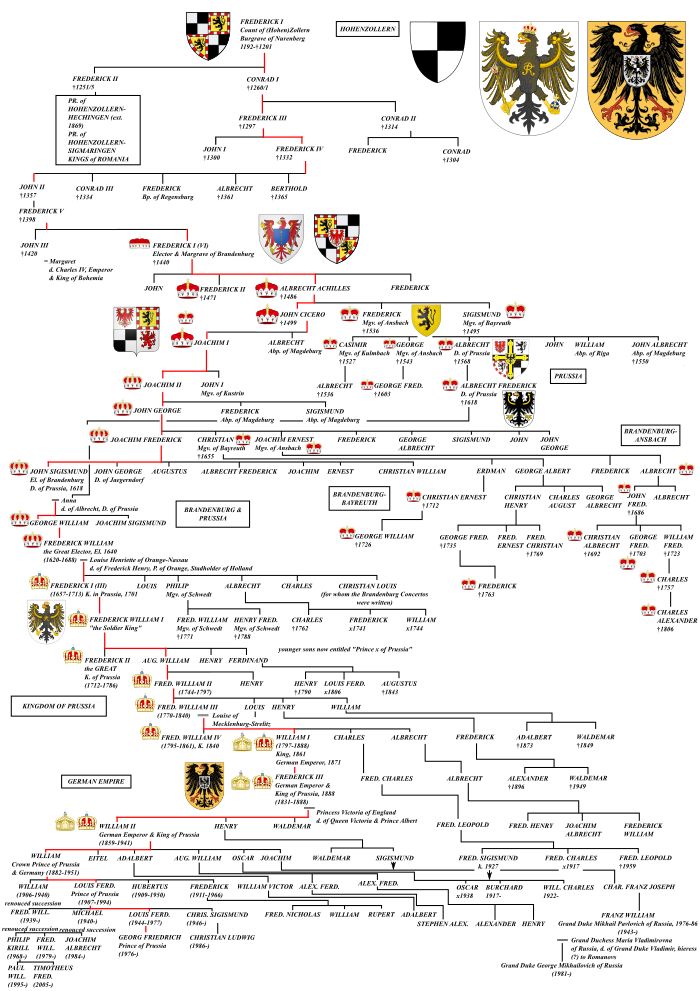
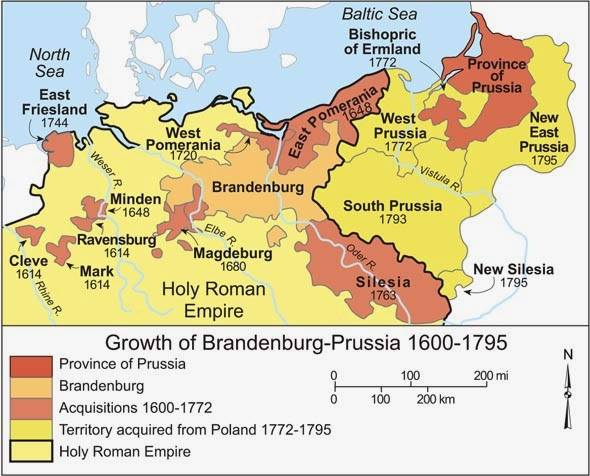
To assess Frederick the Great’s legacy, it is first necessary to understand what Prussia was before he came to the throne. Friedrich II von Preußen was one of dozens of ruling princes from the House of Hohenzollern whose roots lay deep in medieval Germany. The ‘Prussia’ that Frederick inherited was in fact composed of two geographically separate and even culturally distinct principalities: the Markgravate of Brandenburg and the Duchy of Prussia. Mark Brandenburg was a small, marshy patch of land in what centuries later would be the center of the Deutsche Demokratische Republik (German Democratic Republic), a.k.a., ‘East Germany.’
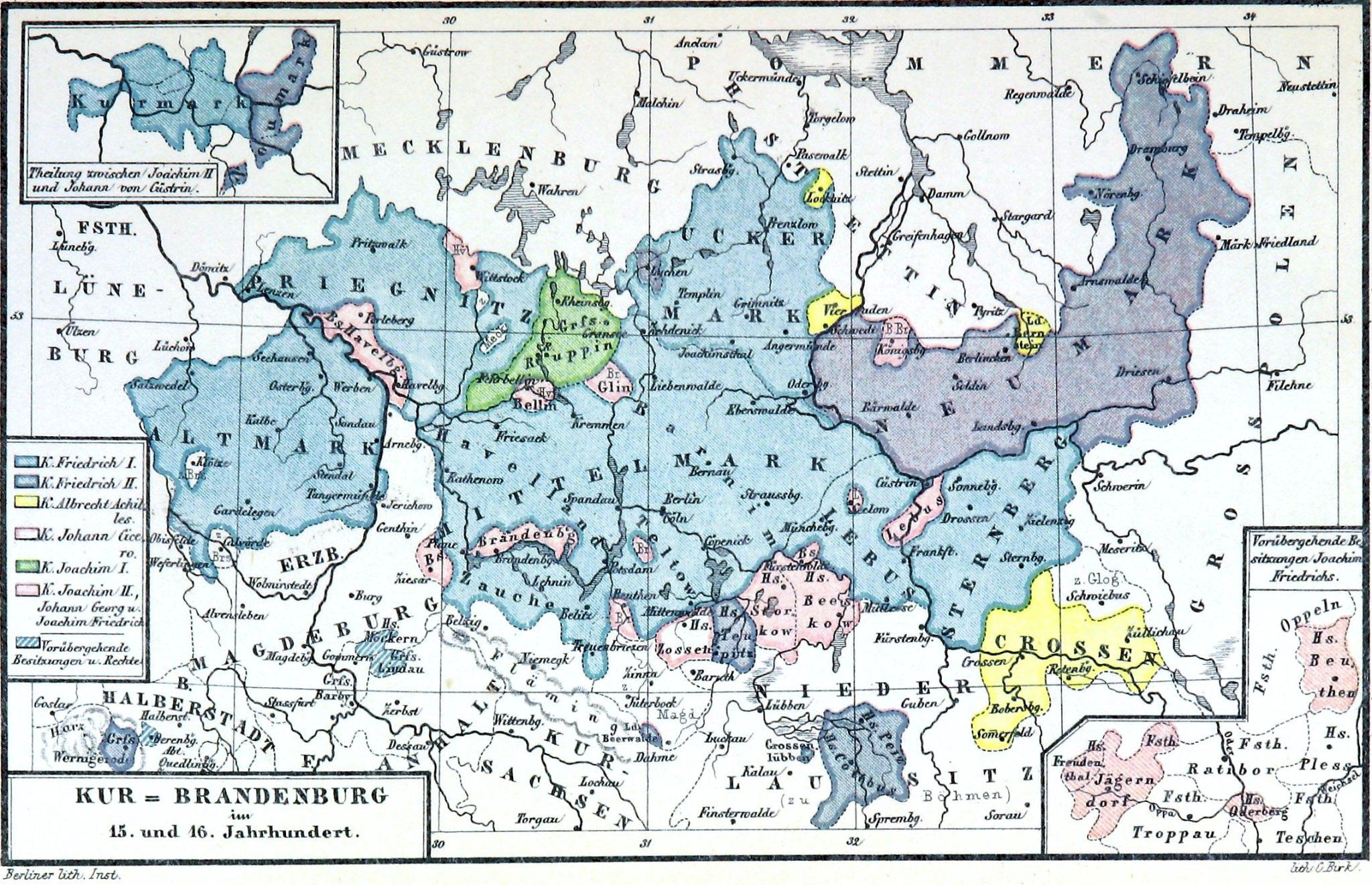
If one had to guess which German principality would become the dominant one and which would eventually unify all of the hundreds of big and small principalities of the Holy Roman Empire, it is safe to assume that no one in the 15th or 16th centuries would have put their money on Mark Brandenburg, a poor, swampy, obscure bit of Germany without a single real city: Berlin at the time was but a village.
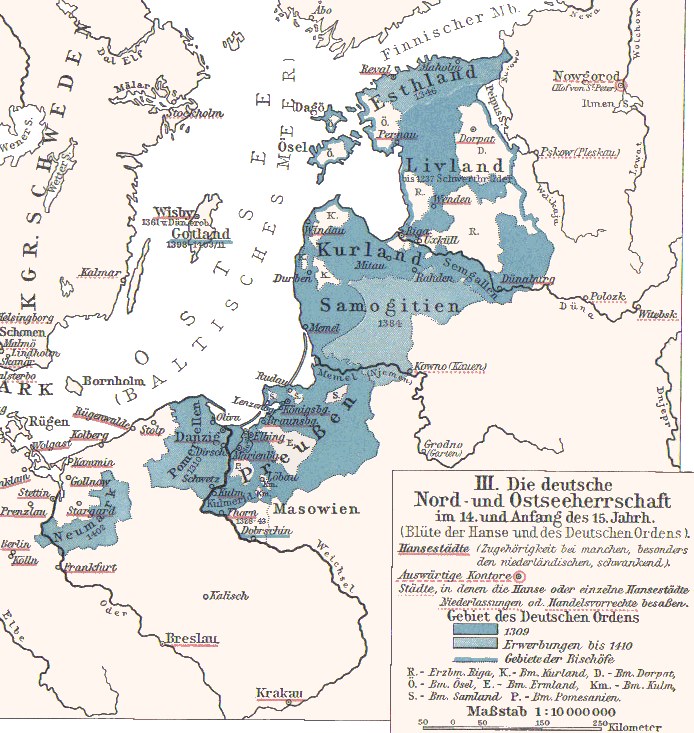
But at the same time, no one would have considered Prussia a candidate for greatness either: this distant, obscure principality lay outside the boundaries of the Heiliges Römisches Reich and was originally not even German — the original ‘Prussians’ were a Baltic tribe who spoke Old Prussian — now an extinct member of the Balto-Slavic group of Indo-European languages. At one point ruled by the Teutonic Knights (Order of Brothers of the German House of Saint Mary in Jerusalem, a.k.a., Orden der Brüder vom Deutschen Haus der Heiligen Maria in Jerusalem or Ordo domus Sanctae Mariae Theutonicorum Hierosolymitanorum, Deutscher Orden, Deutscher Ritterorden), Prussia came into the House of Hohenzollern when Albrecht von Preußen of the Brandenburg-Ansbach branch of the House of Hohenzollern was invested with the duchy of Prussia in 1525; the 37th Grand Master of the Teutonic Order converted to Lutheranism & established a principality independent of the Teutonic Order and of Poland.
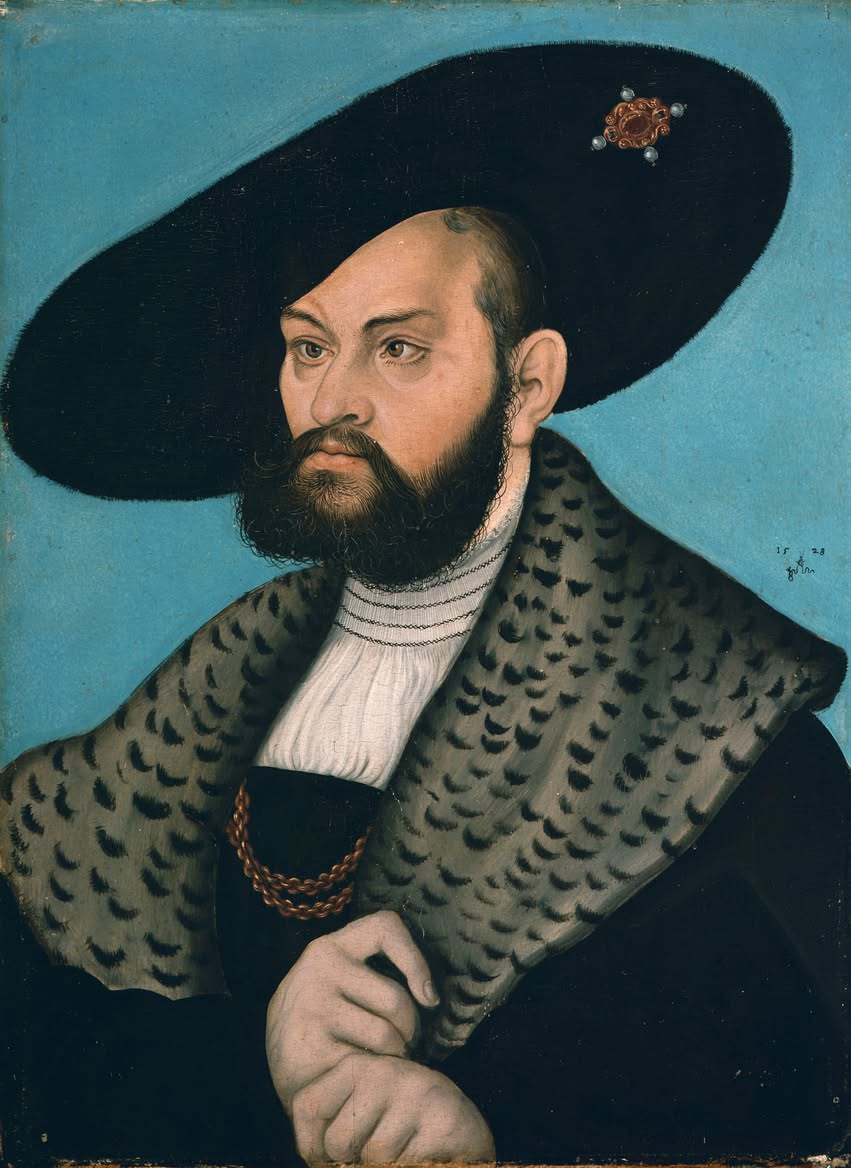
One cannot know how devout Albrecht was at heart, but he certainly seemed to have a taste for extravagantly large and stylish picture hats. But Prussia far from Brandenburg and separated from the Hohenzollern heartland by hundreds of miles of land controlled by Poland whose relationship with the Hohenzollern was rarely friendly.
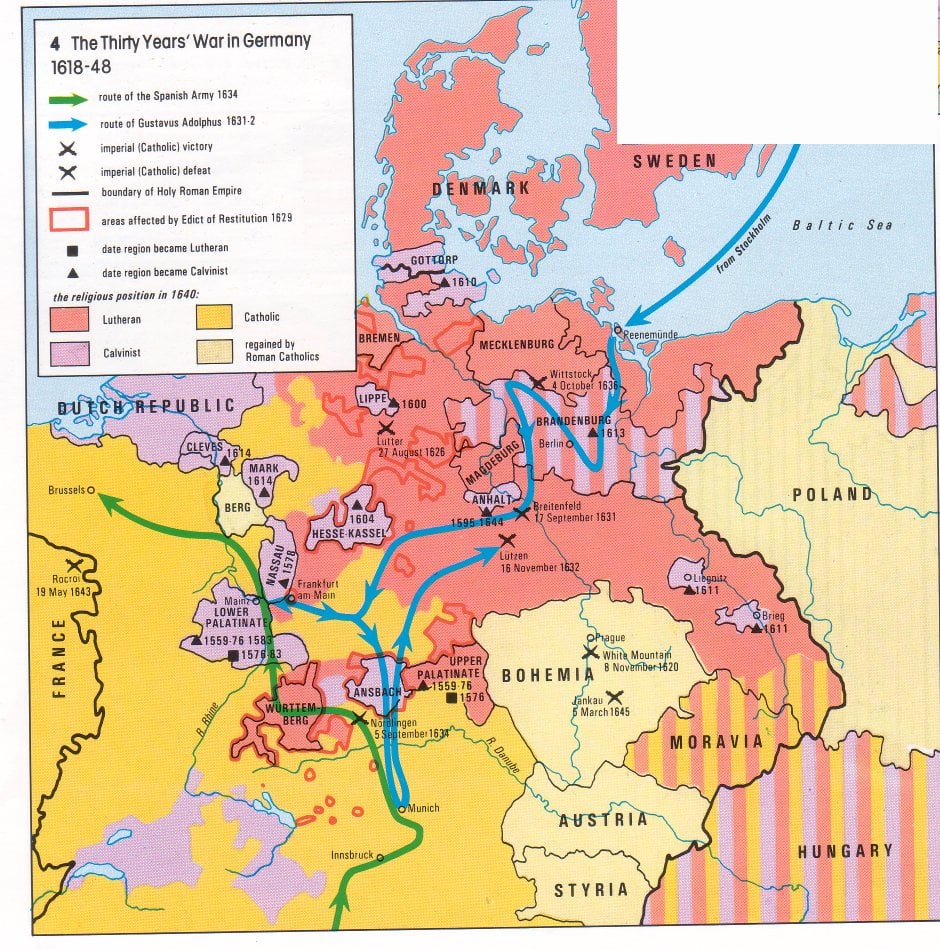
The Thirty Years’ War (1618-1648) which laid waste to so much of Germany ironically gave the House of Hohenzollern the opportunity to raise Brandenburg to the status of a significant if still minor power. Georg Wilhelm (13 November 1595 – 1 December 1640) Markgraf (Margrave) and Kurfürst (Elector) of Brandenburg, vacillated between neutrality and support for the Protestant princes arrayed against the Holy Roman Emperor Ferdinand II; his son, Friedrich Wilhelm I, succeeded to the throne in 1640 and allied Brandenburg with Sweden and the France of Louis XIII and Cardinal Richelieu.
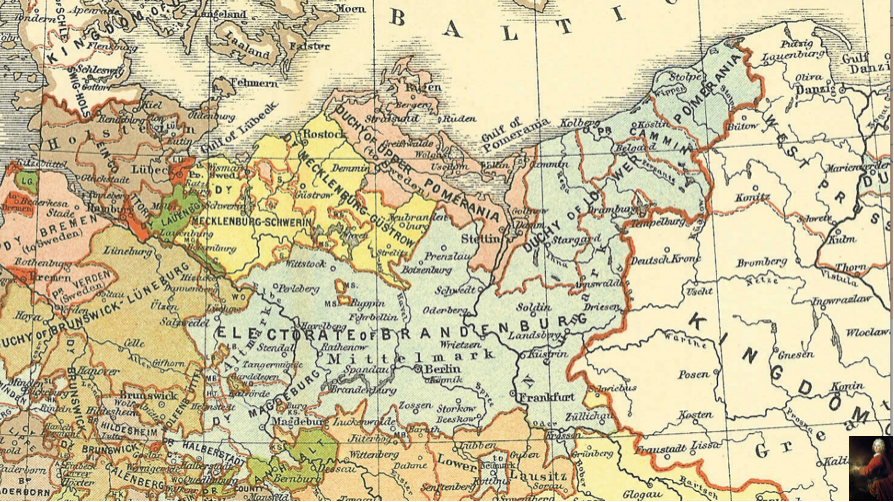
The Große Kurfüst’ (the Great Elector) used French subsidies from the Cardinal to rebuilt Brandenburg and his great-grandson would say of him, “He was praised by his enemies, blessed by his people; and posterity dates from that famous day the subsequent elevation of the house of Brandenburg.” Less admirably, Frederick William also granted a charter to the Brandenburg African Company, the first organized attempt by a German state to take part in the Atlantic slave trade, transporting 17,000 to 30,000 enslaved Africans to the Americas before the Brungenburger Gold Coast was sold to the Dutch in 1721.
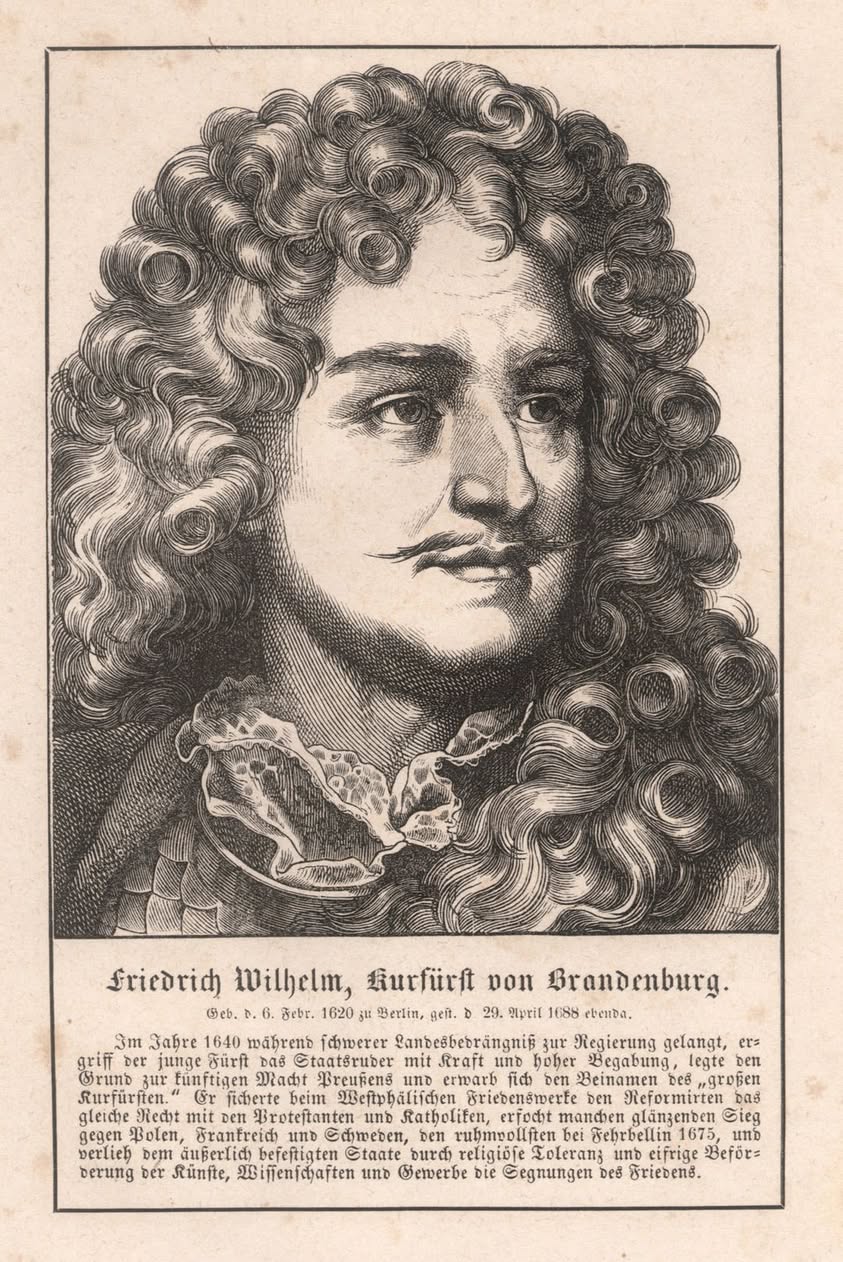
Despite this appalling behavior, Friedrich Wilhelm I nonetheless must be credited with laying the groundwork for Brandenburg-Prussia’s future greatness.
Frederick William I’s son was the first to call himself a Prussian king— after paying a fortune for the title — but because of the odd and almost bizarre rules of the Holy Roman Empire, Friedrich I could only call himself ‘König *in* Preußen’; his grandson would be the first to call himself ‘König *von* Preußen.’
Friedrich I’s son would become known as the ‘Soldatenkönig’ and it was the dream of the Soldier King to build himself an army of giants; towards that end, Friedrich Wilhelm II pid agents to find the tallest young men in Germany and Europe, even going so far as to kidnap some. Frederick William I was a violent alcoholic who beat his son and though him effeminate for playing the flute and preferring to speak French rather than German.
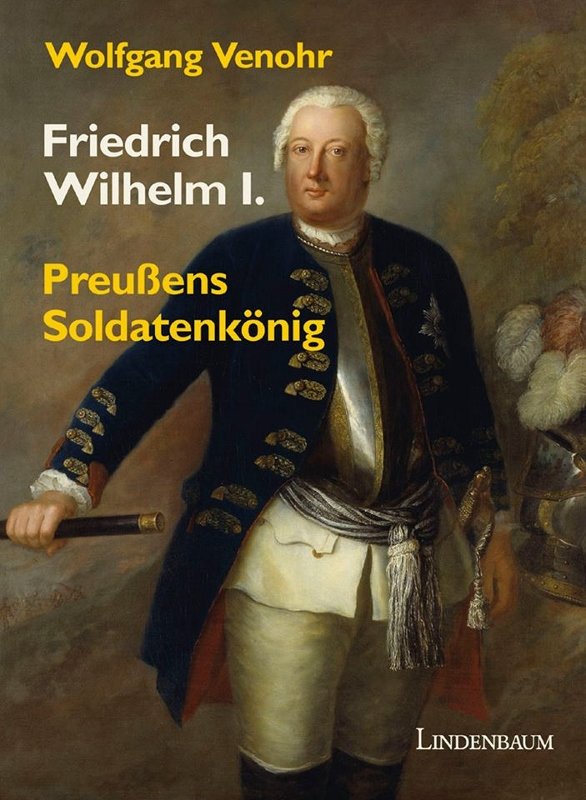
Frederick the Great’s biographer Nancy Mitford believed that the evidence suggested that Friedrich Wilhelm II had porphyria —the same disease that his distant relative George III (who remained Elector of Hanover as well as king of England, Scotland and the United Kingdom) would suffer and lead to his confinement after bouts of apparent madness.
Friedrich Wilhelm was enraged by his son’s affairs with other young men, including the king’s page Peter Karl Christoph von Keith; but it was the crown prince’s plan to flee to England with his tutor Hans Hermann von Katte that drove the king to extreme measures: he had Lieutenant von Katte executed before Friedrich’s very eyes— though according to some accounts, young Fritz fainted before the sword struck von Katte’s head off; it was for good reason that young Friedrich feared for his life as long as his raging violent alcoholic father still lived; nonetheless, there were a few moments of tenderness and appreciation between father and son and Frederick later in life expressed genuine respect and admiration for his father’s rule.
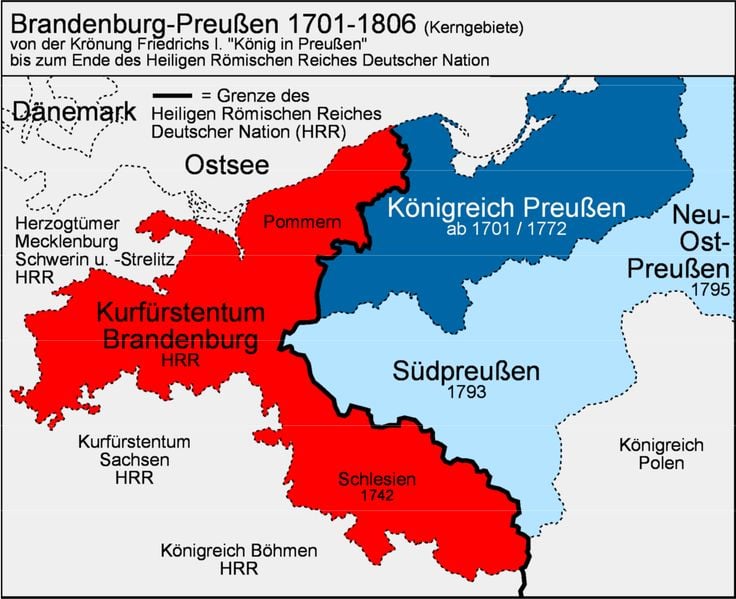
But Friedrich II was no doubt extremely relieved when he came into his inheritance — becoming the first ‘König *von* Preußen’ and according to many, its greatest. Frederick’s first act was his boldest and most daring, invading Silesia and forcing the young Maria Theresa to defend the richest province in the Habsburg empire; her father Holy Roman Emperor Charles VI had spent most of his reign seeking agreement to the ‘Pragmatic Sanction’ that would have European powers recognize his elder daughter as the rightful heir to the Habsburg Erblande (hereditary lands); but he should have spent those years trying to renovate the creaky old empire that he passed onto his daughter. Frederick’s invasion of Silesia would provoke Maria Theresia’s comprehensive reform of the ramshackle empire though she would never recover Schlesien; instead, the wealthiest province in her empire would provide the basis for Prussia’s greatness as Friedrich surmised; with its majority Protestant population and coal mines, Silesia was the most industrialized province in a largely agrarian Habsburg empire and though it took the First and Second Silesian Wars to secure it and the enormous loss of life as well as financial resources the wars entailed, the acquisition proved to be worth it in the long run in terms of state building.
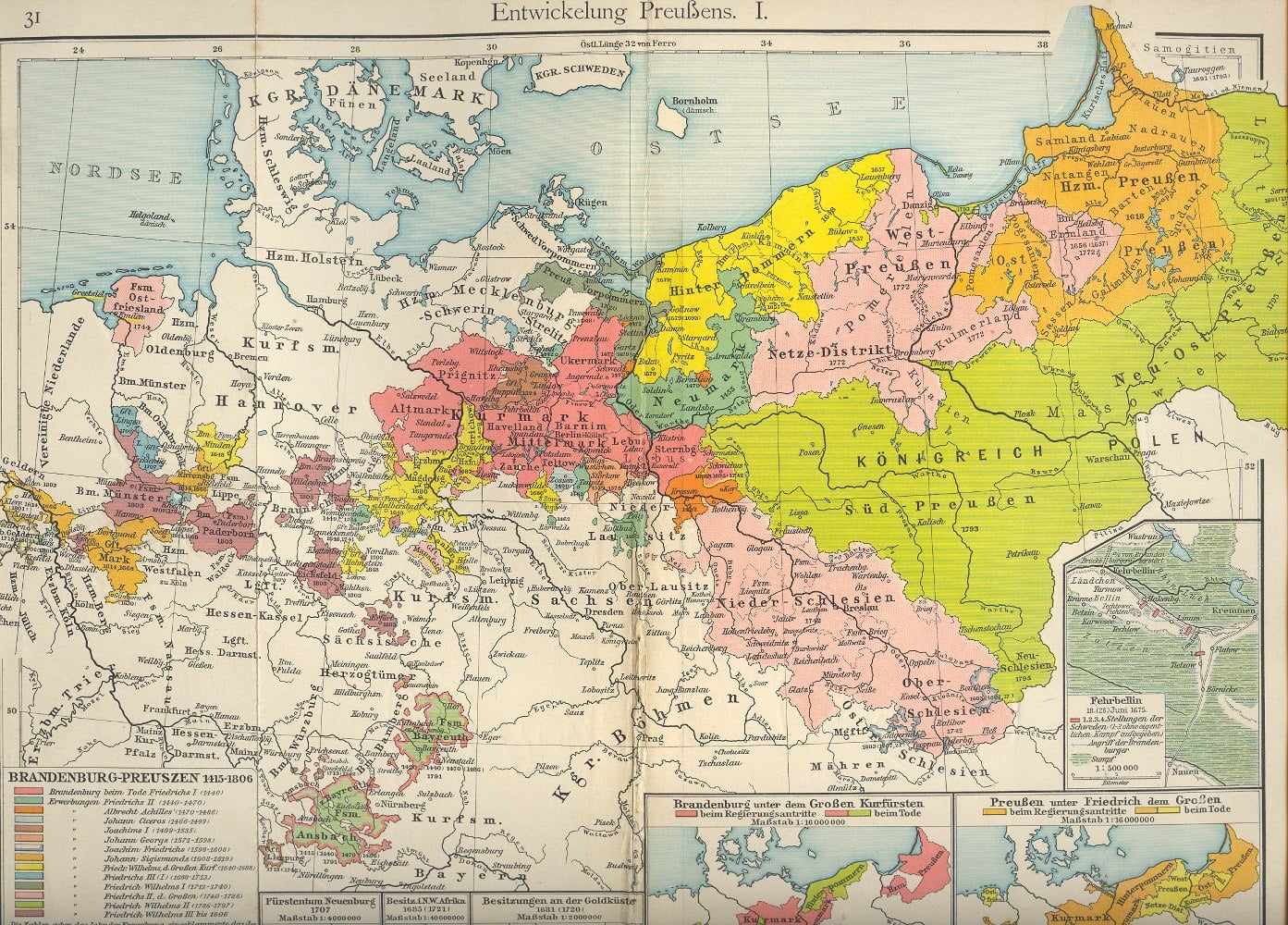
Friedrich’s reputation for military prowess is ironic given his father’s doubts about his masculinity and commitment to the code of the warrior king; but of course Frederick had both successes and defeats. Rossbach was one of his greatest successes and helped gain him a Europe-wide reputation for military genius.
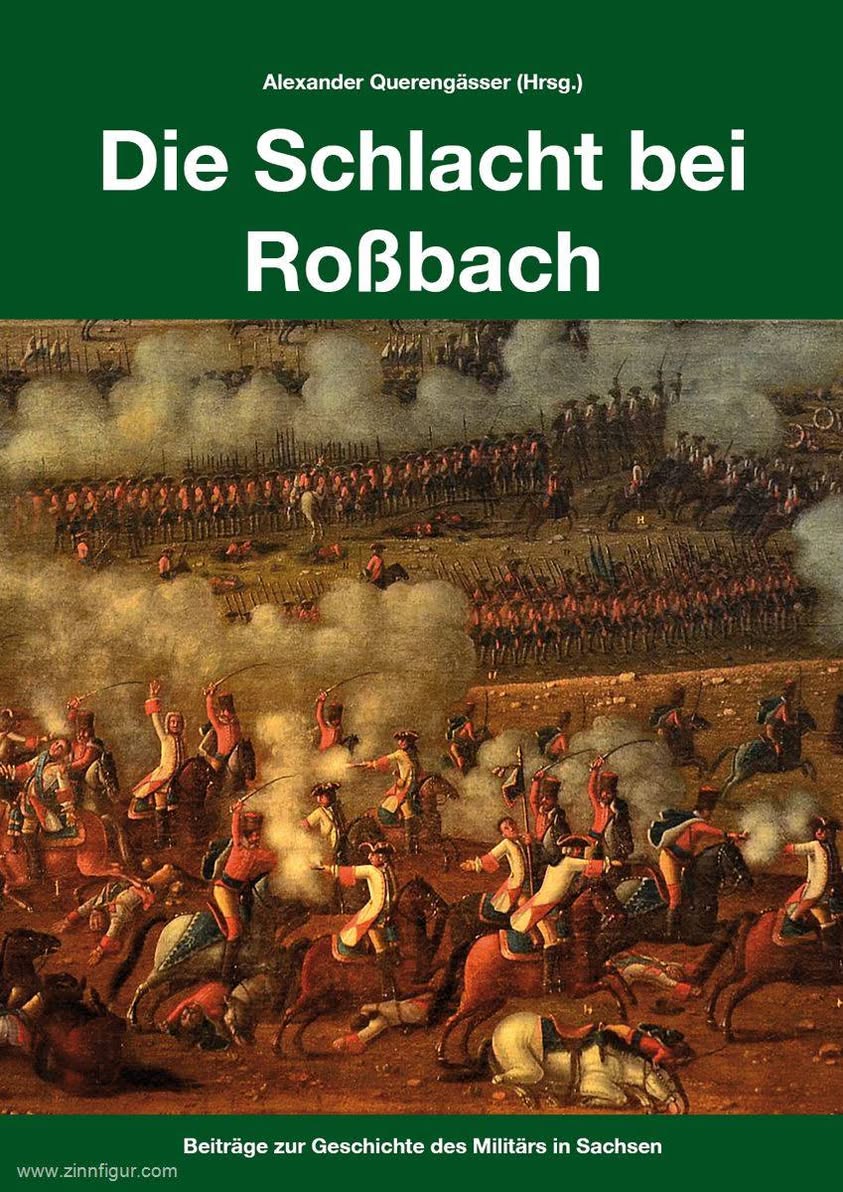
Nonetheless, the Seven Years’ War that Frederick’s ambitions set off nearly destroyed him and Prussia. Friedrich gained only one firm ally — the United Kingdom — while prompting Maria Theresa to form an alliance with the Habsburgs’ old enemy, France; this ‘renversement des alliances’ would make Louis XV the most important ally of the Holy Roman Empress — only ’empress’ of course because her husband was elected Holy Roman Emperor (women being barred from that office; perhaps even more dangerously, Frederick provoked the enmity of Elizaveta Petrovna; the daughter of Peter the Great had seized power in a coup d’état — wearing a guardsman’s military uniform no less — and had an almost irrational hatred of Friedrich; the empress sent an enormous Russian army against Frederick, surrounding Berlin and threatening his destruction and that of the Prussian kingdom; only the sudden and unexpected death of the tsarina in 1762 saved Friedrich as Elizabeth’s heir Peter III was not only German (duke of Holstein) but an enormous admirer of Frederick; Peter immediately called off the war, outraging the Russian élite and contributing to his eventual overthrow by his wife in her own coup détat.
The Seven Years’ War is accounted by some historians as the first world war, having been fought on three continents; Frederick was able to bring the Seven Years’ War to a successful conclusion in 1763 and Maria Theresa was forced to accept the permanent loss of Silesia. In 1772, Catherine and Frederick conspired in the First Partition of Poland — making no fans for either among Polish nationalists; after the second and third partition, Poland would be wiped off the map of Europe.
A few words need to be said about Peter III’s wife, Sophia von Anhalt-Zerbst who would overthrow him and declare herself Catherine II, going down in history as Catherine the Great. Catherine has frequently been linked with Frederick the Great as the other most famous example of Enlightened Despotism; but the truth is that Friedrich was far more enlightened while Catherine was far more despotic; she may have invited Denis Diderot (editor of the famous Encyclopédie) to St. Petersburg but they quarreled and she eventually sent him packing. While Catherine dabbled with liberal Enlightenment ideas, in the end, she deepened the oppression of the serfs in order to secure the support of the Boyars; in contrast, Frederick genuinely deserves the appelation ‘Great’ for instituting important reforms such as instituting freedom of speech and freedom of the press throughout his kingdom.
Like Catherine, though, Frederick was a great patron of the arts; he employed Georg Wenzeslaus von Knobelsdorff (born in 1699) to design Sans Souci in Potsdam as well as its gardens.
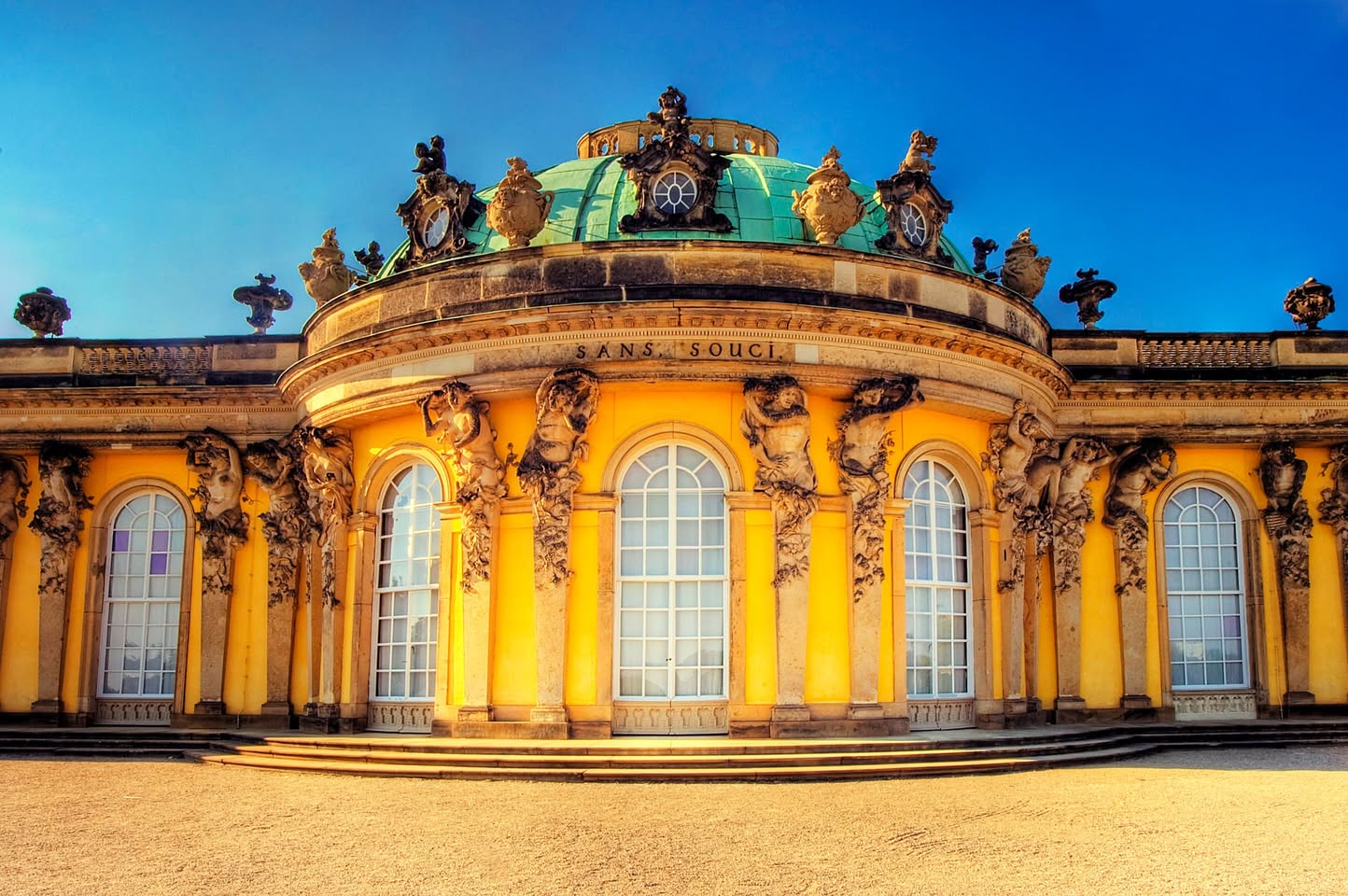
Knobelsdorff apparently warned the king that the height of the palace needed to be greater than Frederick wanted it to be or it would not be sufficiently high to be seen easily above the gardens from the bottom of the cascade; Knobelsdorff was clearly right about that:
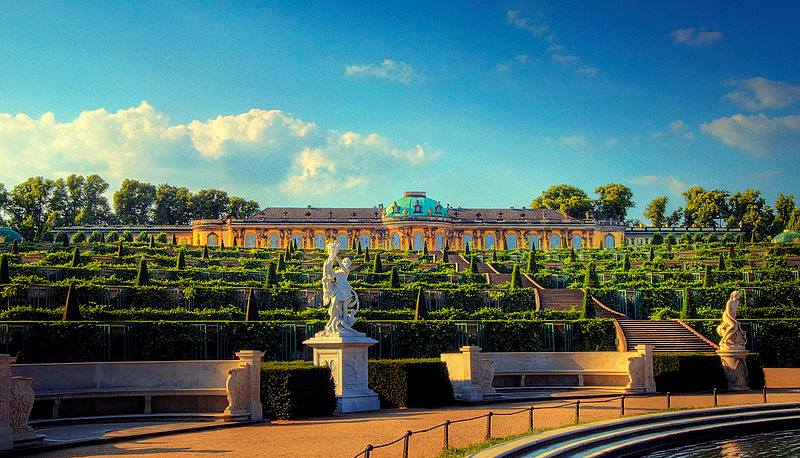
Nonetheless, the palace is clearly a masterpiece of Baroque architecture and Sans Souci’s gardens are a masterpiece of landscaping and a sheer delight to stroll through (as I did on my one and so far only visit to Potsdam).
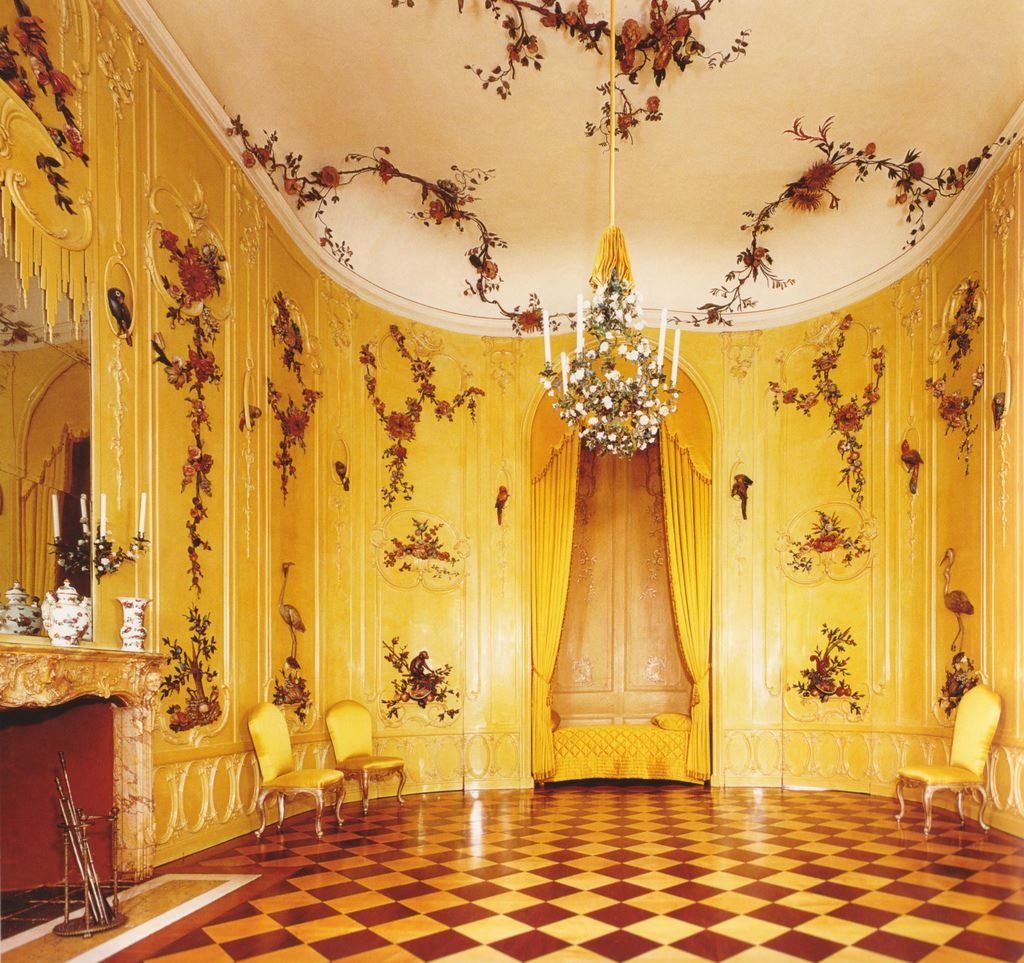
And the interior is a masterpiece of Rococo interior design; this is the chamber in yellow is the room where Voltaire took up residence during his time at Frederick the Great’s court.
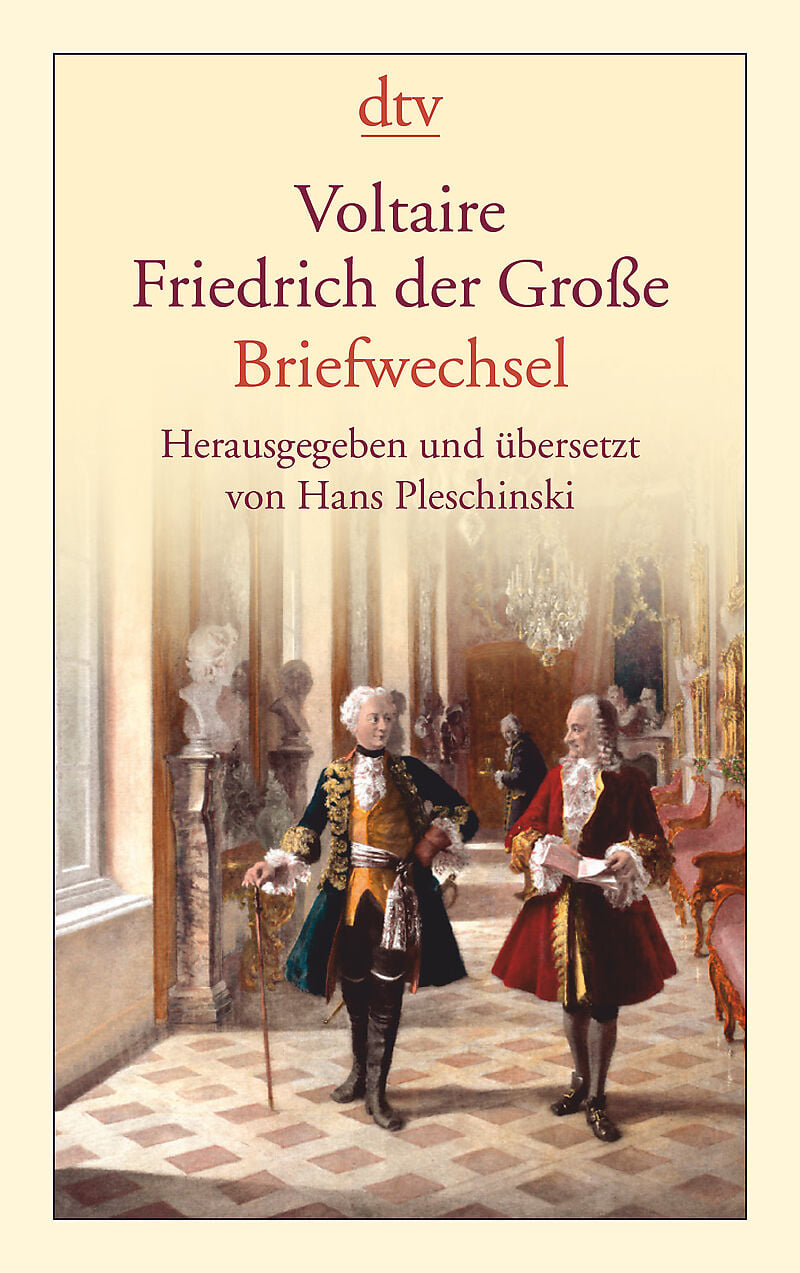
François-Marie Arouet left Potsdam in 1752 after quarreling with Frederick the Great. Friedrich der Große was a huge admirer of Voltaire from afar, but two years of the Frenchman’s residence at Sans Souci was enough to sour Frédéric le Grand on the acerbic Enlightenment wit.
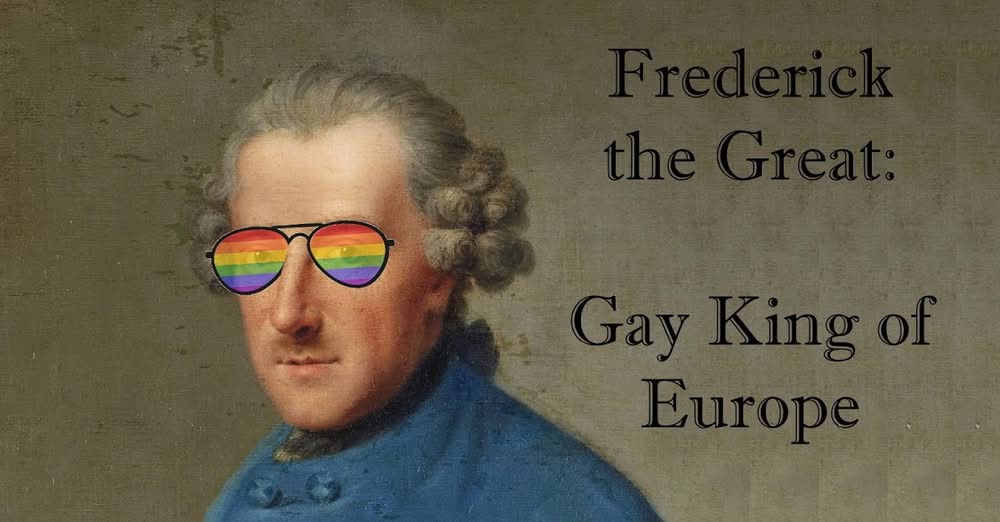
Frederick is accounted “one of the most well documented homosexuals in history” (“Frederick the Great: Gay King of Europe“) in numerous YouTube videos and somewhat more discreetly in Nancy Mitford’s gossipy, fun but very well researched biography (Nancy Mitford, “Frederick the Great,” New York: Harper & Row, 1970). One might ask about the relevance of the king’s sexuality; I would argue that one cannot understand him without understanding his sexual orientation. Of course, the term ‘homosexual’ was not invented until the late 19th century and the term ‘gay’ (for male homosexual) did not come into common parlance until the 20th century, so Der Alte Fritz would not have identified with either of those terms; as a king, he could not afford to identify with the pejorative term ‘sodomite’ or any other term with negative connotations.
But the evidence from Frederick’s correspondence and poetry makes fairly clear that his primary sexual and romantic orientation was to other males and there is in fact no concrete evidence that he ever had sex with any woman — including his queen consort — who of course was opposed on him by his aggressively heteronormative father.
Der Alte Fritz had no son or daughter and so when he died in 1786, his hapless nephew inherited the crown, quickly proving that he was not even close to his uncle’s level of leadership.
Der Alte Fritz’s reputation suffered somewhat because of an association with the Nazi Third Reich that he no doubt would have utterly despised; one can’t blame Frederick for the fact that Adolf Hitler and other German fascists admired Friedrich for the role they ascribed to him as the leading German nationalist of his day; it isn’t even clear that he himself would have seen himself as such; he had his ambitions, but they were for Prussia, not for Germany which in his day was at best a ‘mere geographic expression’ — as Napoléon famously said of pre-Risorgimento Italy. One cannot necessarily admire Frederick’s unprovoked attack on Silesia but despite the appalling human cost of the two Silesian Wars, there is no question that his act of aggression helped build the kingdom and provide the basis for the Prussia of Otto von Bismarck that enabled the Eisenkanzler to unify Germany under Prussian leadership.
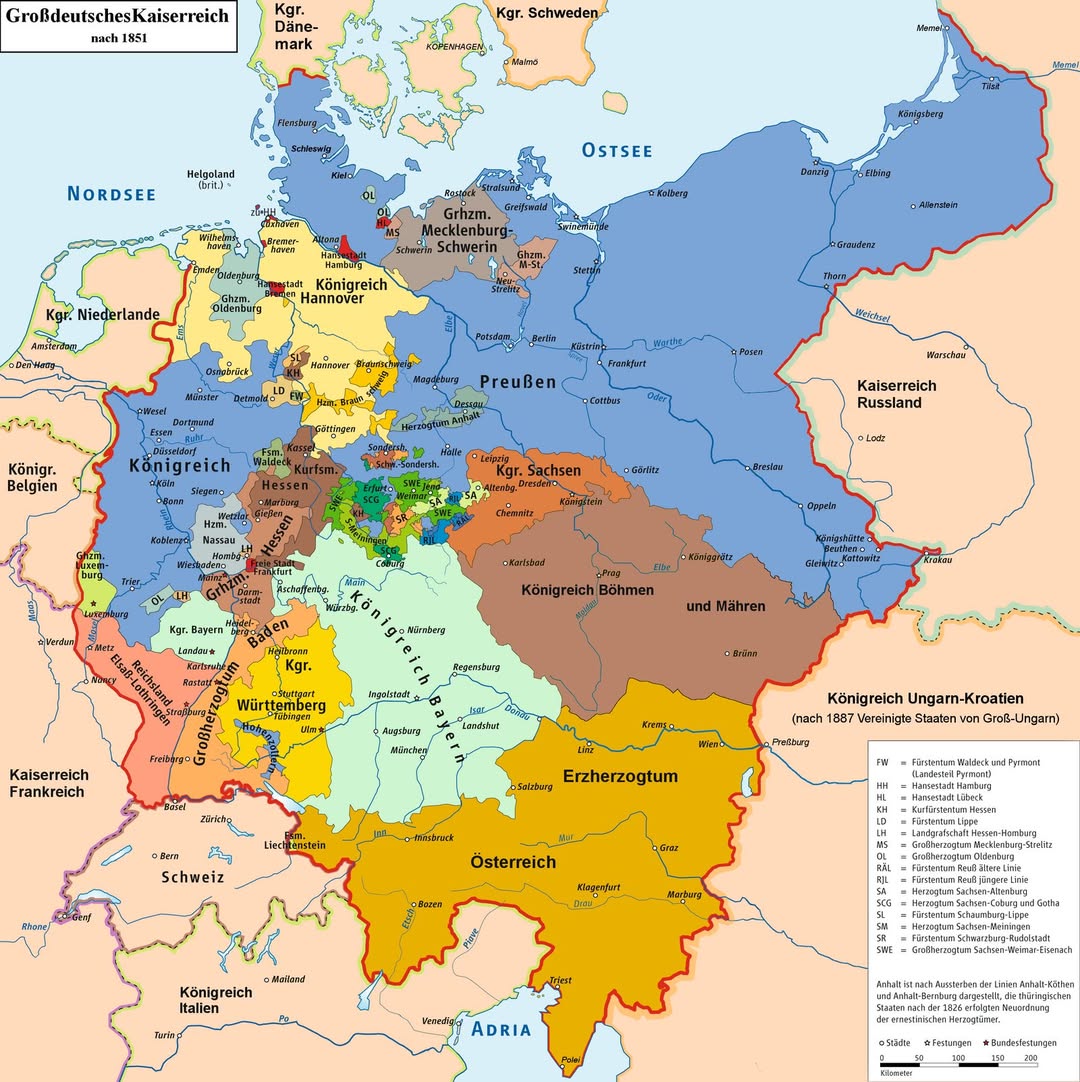
Like Frederick, Bismarck was both brilliant and ruthless; but also like Friedrich, the Iron Chancellor never made war for its own sake; it was a means to clearly conceived ends; the Haus Hohenzollern that both served so ably would collapse when Kaiser Wilhelm II blundered into World War I after dismissing Bismarck.
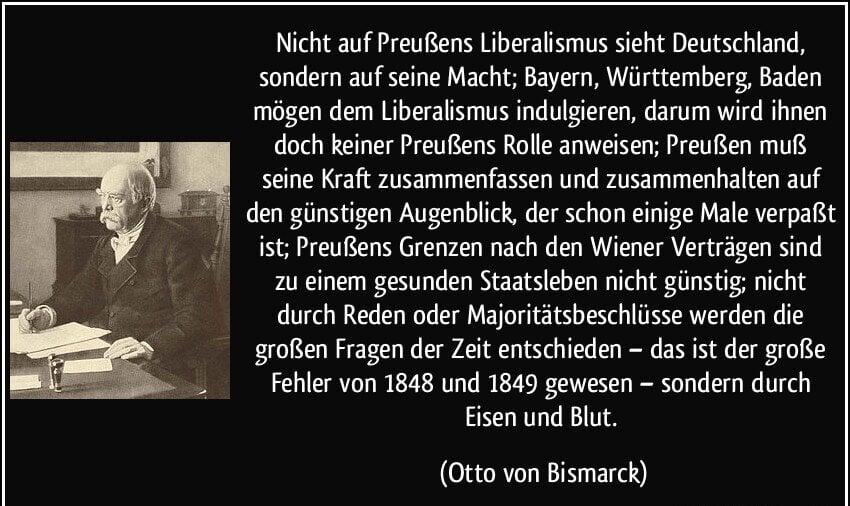
In the end, whatever one thinks of Friedrich, there is no question that he is one of the most important and most fascinating figure in German and indeed European history.

Pauline Park is an LGBT and Palestine solidarity activist and writer who lives in Queens; she received her Ph.D. political science from the University of Illinois at Urbana-Champaign in 1994; she spent two months in Berlin in 1990 and six weeks in Regensburg (in Bavaria) in 1991.