Ludwig II: Bavaria’s Mad Castle King Was Also a Mad Opera Queen
by Pauline Park
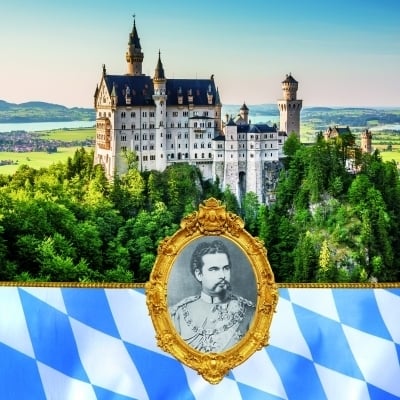
Ask someone to picture a castle and the one that will come first to mind for many if not most people is Neuschwanstein; perhaps they might think of the castle in the middle of Disneyland in Anaheim (California), but that castle was in fact modeled after Neuschwanstein. Some will know that Neuschwanstein was built by Ludwig II of Bavaria and most of those who have heard of Bavaria’s fourth king of will have heard him referred to as ‘Mad King Ludwig.’ But was he really mad…? Therein hangs a tale…
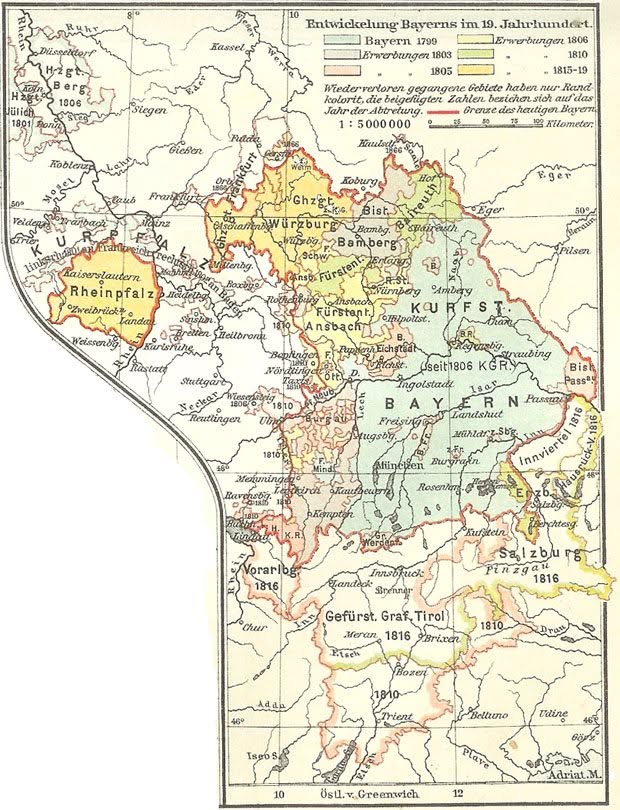
The Bavaria that we know today as a Bundesland (federal state) of the Bundesrepublik Deutschland (Federal Republic of Germany) is the product of more than a millennium of development and expansion; in the 10th century, the Herzogtum Bayern included much of what is now Austria, but on 17 September 1156, the Holy Roman Emperor Barbarossa issued the Privilegium Minus decree that elevated the Bavarian frontier march of Austria (Ostarrîchi) to a duchy, establishing its independence from Bavaria; the duchy eventually passed from the House of Babenberg to the House of Habsburg, which used the archduchy as the basis for the creation of its vast Central European empire.
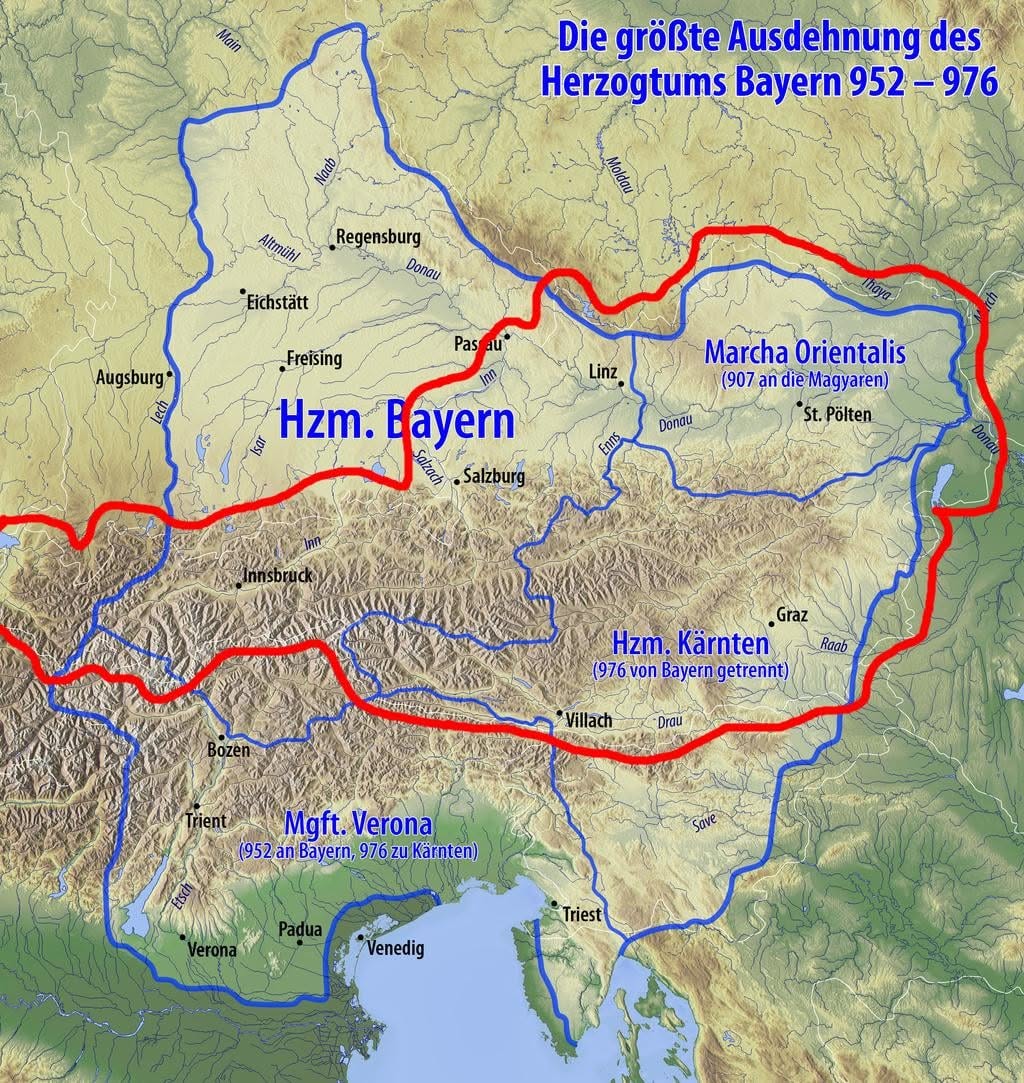
The separation of the kernel of modern Austria from the duchy of Bavaria sent those two principalities on different paths even if Bavaria and Austria are culturally extremely similar: both are profoundly Catholic and primarily rural and the Bavarian and Austrian dialects of German are considered by many linguists to be part of the same Bavaro-Austrian German dialect that is the basis for Austrian standard German (so different from BRD Hochdeutsch).
As Bavaria expanded slowly over the course of the centuries, its status was upgraded from a duchy to that of an electorate and eventually to that of a kingdom; the Königreich Bayern only lasted a little over a century: 1806–1918; when World War I destroyed the Second German Reich, it also ended the nominal independence of the kingdom of Bavaria.
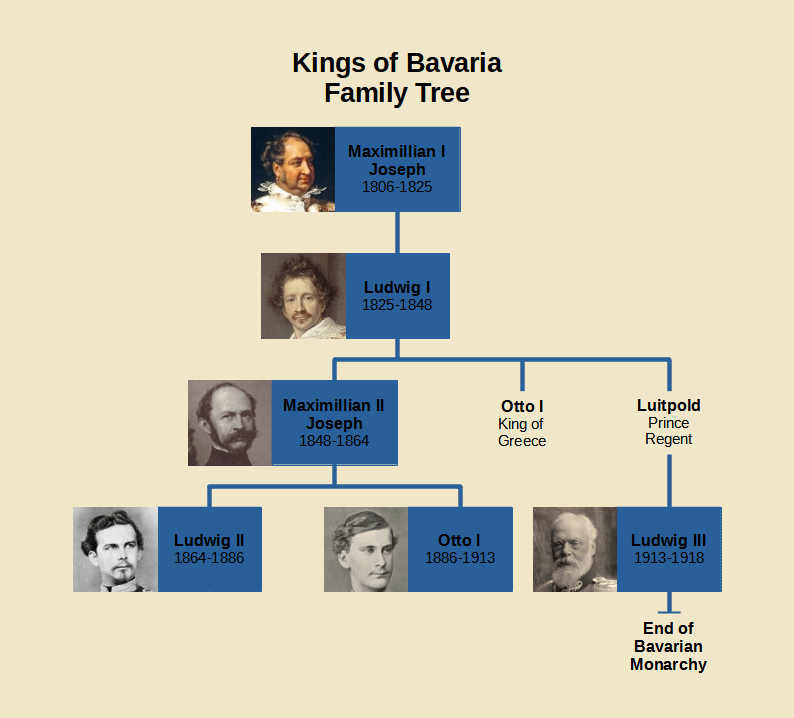
Throughout the history of Bavaria as duchy, electorate and kingdom, the Wittelsbach dynasty reigned supreme; and there is no doubt that Ludwig II (8.25.1845-6.13.1886) is by far the most famous and most memorable of the Wittelsbachs just as Friedrich II (Frederick the Great) is by far the most famous and most memorable of the Hohenzollerns.
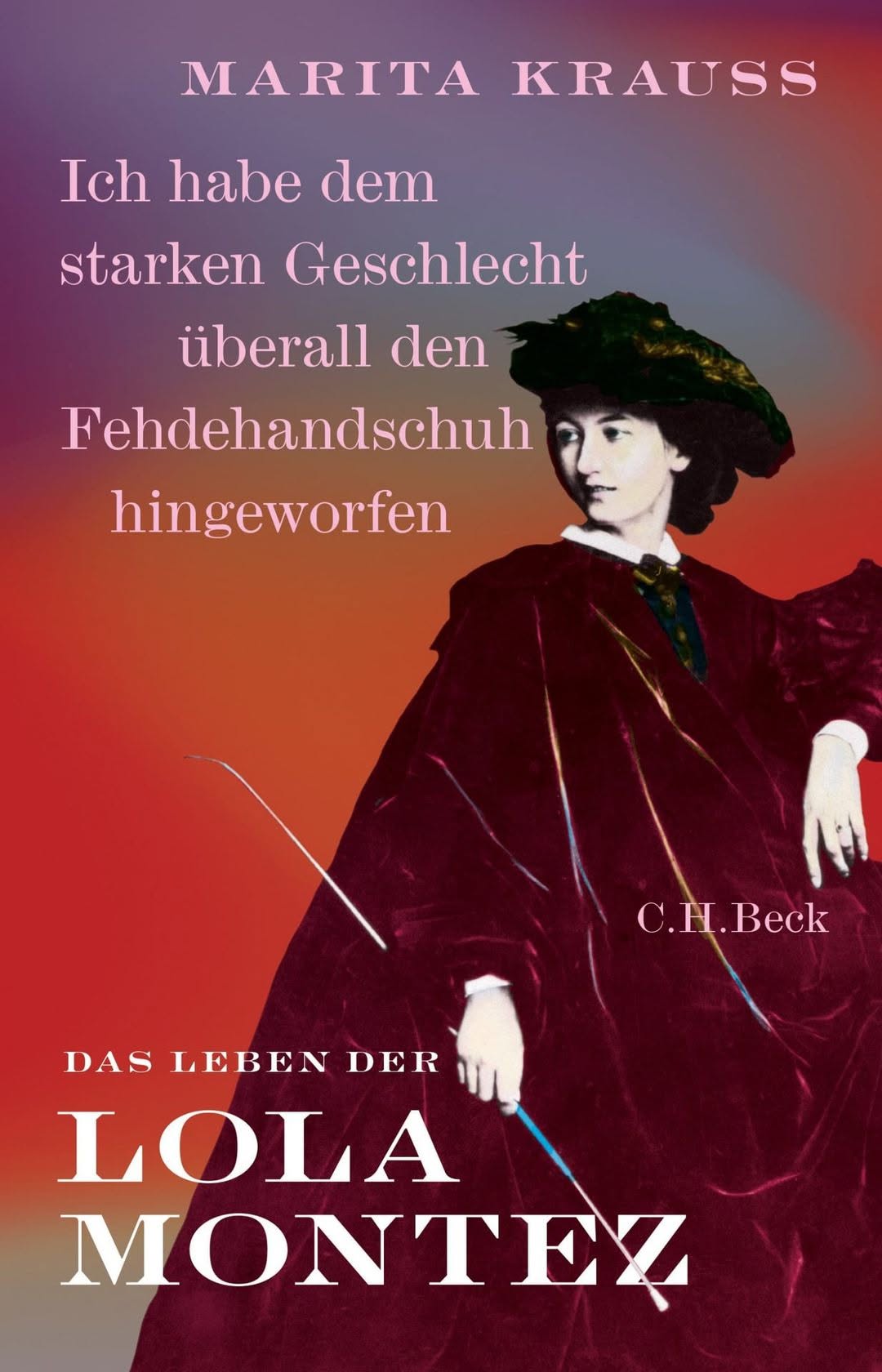
But there is one of Ludwig’s predecessors who rivals his notoriety: his grandfather Ludwig I after whom he was named (at his grandfather’s insistence). Ludwig I (1686-1868) reigned from 1825 until 1848; encouraging Bavaria’s industrialization, he built the kingdom’s first railways; initially liberal, he became increasingly repressive. A great patron of the arts, Ludwig I also was susceptible to the feminine charms of Eliza Rosanna Gilbert, the Irish dancer and actress who became (in)famous as the ‘Spanish’ dancer Lola Montez. The scandal of the king’s relationship with the notorious courtesan only intensified when he named her Gräfin von Landsfeld and granted her a large annual annuity; but the countess went far beyond the role of royal mistress to meddle in government affairs, pushing a liberal, anti-Catholic and anti-Jesuit agenda in the most profoundly Catholic of the South German states.
When the the Revolution of 1848 swept Bavaria, the rising wave of resentment of Lola Montez and her royal paramour provoked his abdication in favor of his son, who became Maximilian II. Lola fled Bavaria and the greatest threat to the Bavarian monarchy dissipated; but the scandal created a precedent for the overthrow of a Bavarian king that would profoundly influence the reign of his grandson and namesake.
Whatever his failings as king, Ludwig I showed an affection to his grandson that Maximilian and his wife were uninterested or incapable of showing the sensitive young boy; quite the contrary: Maximilian subjected his elder son and heir to physical brutality in the form of corporal punishment as well as a punishing tutelage by tutors who became exasperated with the dreamy boy’s inattention to the subjects his father thought were most important for a future king to master.
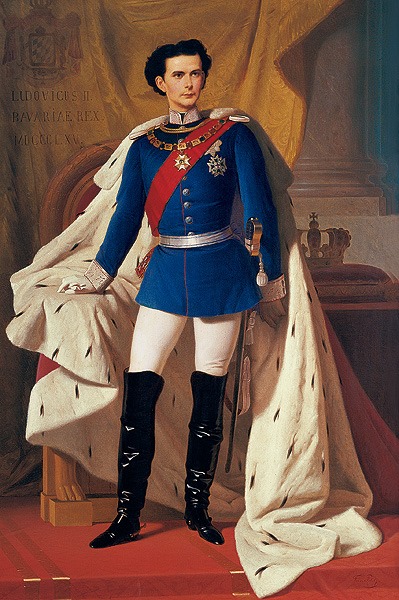
The future Märchenkönig (fairytale king) took only one thing from his father other than his crown: the royal family’s summer residence at Hohenschwangau was decorated with murals depicting medieval knights and their chivalry — including the story of Lohengrin — with whom the young boy developed an intense identification.
Ludwig’s parents were either uninterested in a real relationship with their sons Ludwig and Otto or incapable of showing true affection; as a result, the young crown prince retreated into a fantasy world of medieval knights that anticipated his castle-building as king. When Ludwig attended a performance of “Lohengrin,” it captivated the young king (Fantastic History, “Ludwig II of Bavaria: The Tragic Love and Mysterious Death of Bavaria’s Last Dreamer“).
When Maximilian I died unexpectedly in 1845, Ludwig II had the opportunity to turn his medieval fantasies into reality; the new king immediately deputized one of his officials to search for Richard Wagner and invite the composer to come to Munich as Ludwig’s court composer. Wagner was found in a dingy flophouse hotel in Stuttgart hiding out from his army of creditors and the king’s invitation changed both of their lives as well as the course of Bavarian history and that of opera and indeed the cultural trajectory of the 19th century (Wilfrid Blunt, “Dream King: Ludwig II of Bavaria, New York: the Viking Press, 1970). and prompted him to invite Richard Wagner to come to Munich with extraordinary consequences for both the king and the composer.
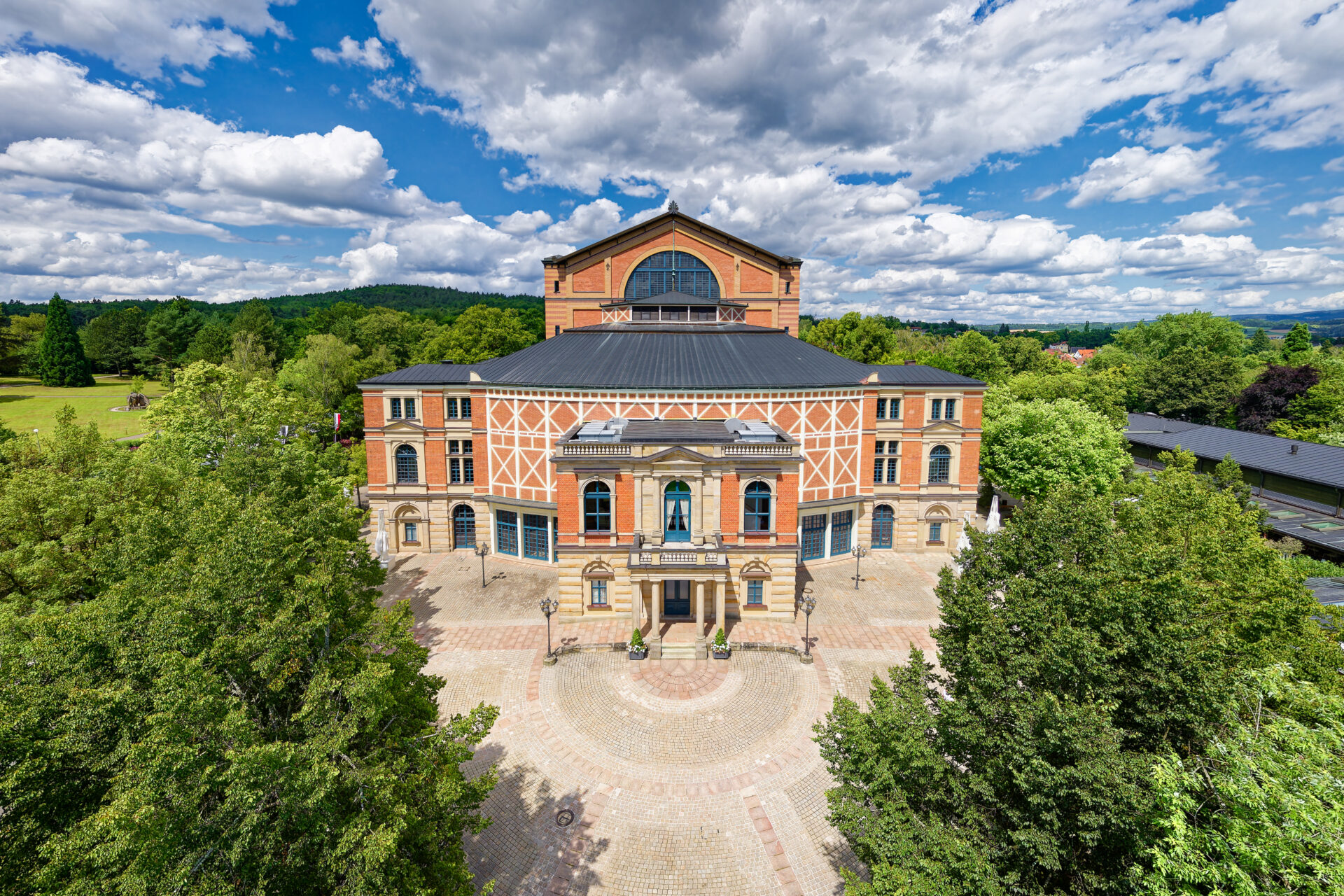
There is no question that Ludwig II’s patronage of Richard Wagner not only saved his career, it may well have saved his life; and it was the generosity of the king of Bavaria that funded all of Wagner’s greatest works, including “Tristan und Isolde,” “Der Ring des Nibelungen” and “Parsifal.” The enormous Ring cycle was the largest operatic work ever created and Ludwig built the Bayreuth Festspiele to stage it; but it was “Tristan” that changed the course of musical history: the prelude signaled the beginning of Late Romanticism and the dissolution of the diatonic harmonic structure embodied in the Classical music of Haydn, Mozart and Beethoven presaged modernism in music; in that sense, Ludwig’s patronage of Wagner was even more influential in music, opera and theater than the legendary castle building that immortalized the king.
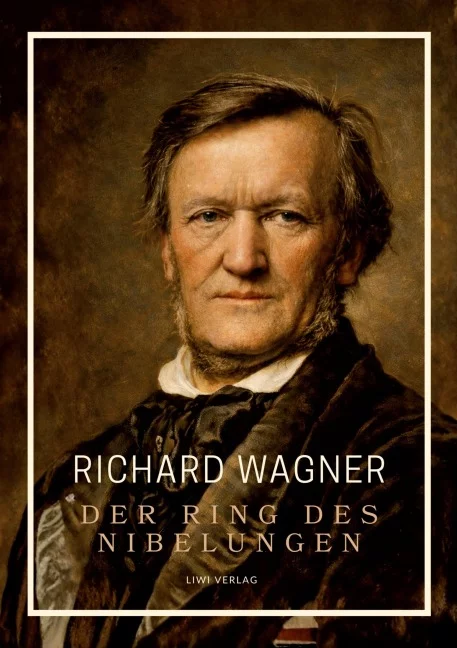
Wagner was a vicious anti-Semite and a sociopathic manipulator and took advantage of Ludwig’s generosity and infatuation with him but there is no indication that their relationship was ever physical; in fact, Wagner was a notorious womanizer and scandalized the Bavarians with his affair with Cosima von Bülow even as the cuckolded conductor Hans von Bülow was conducting premieres of Wagner’s operas. Unknown at the time, Wagner was a closet crossdresser, as the Guardian revealed some years ago, but a heterosexual crossdresser with absolutely no interest in other male bodies. The resentment of Wagner’s insidious influence on Ludwig spread to the newspapers and the general public and the king’s ministers gave him an ultimatum: either Ludwig dismiss Wagner or the cabinet would resign en masse.
So Ludwig tearfully dismissed his beloved composer and the sent him packing, plunging the king into a deep depression and provoking the greatest building project in Bavarian history. With the departure of Richard Wagner, Ludwig retreated into a fantasy world from which he would never emerge. One of the most damaging aspects of Ludwig’s retreat from reality was his breaking off of his engagement with his cousin Sophie; after the joyous public celebration of the engagement, the disappointment in the press as well as the cabinet and among the public was palpable; the reality was that Ludwig would never marry and would never produce an heir, and tragically, his younger brother Otto would succumb to the mental illness that was a recurring theme in the history of the House of Wittelsbach and would eventually be institutionalized.
Ludwig’s beloved cousin Elisabeth who married Kaiser Franz Josef and became empress of Austria was perhaps also touched by the mental illness that apparently ran in the family and their son and heir Rudolf may also have been touched by it, with tragic consequences for the House of Habsburg and indirectly for all of Europe. ‘Sisi’ was closer to Ludwig than anyone and perhaps she alone understood him fully.
Much as both Ludwig and his cousin Sisi wanted to retreat from the world, events intruded. Otto von Bismarck’s ambition to unify Germany under Prussian leadership would have profound consequences for Ludwig’s Bavaria. Prussia’s Eisenkanzler enlisted Austria in the two Schleswig Wars against Denmark that gave Prussia control of Schleswig-Holstein in 1865; the Iron Chancellor then turned Prussian guns on its erstwhile ally Austria in the Austro-Prussian War of 1866 that destroyed Austria’s nominal leadership of the German states and enabled Bismarck to pursue the ‘Kleindeutsche Lösung’ (Small German Solution) of German unification under Prussian leadership excluding Austria entirely. The result of the intra-German fratricide was to force Bavaria into a secret treaty that would put Bavarian troops under Prussian command in the event of another war; that war was the Franco-Prussian War of 1870 that forced the South German states of Baden, Württemberg and Bavaria into the new Second German Reich despite their cultural affinity with Austria as largely rural Catholic principalities.
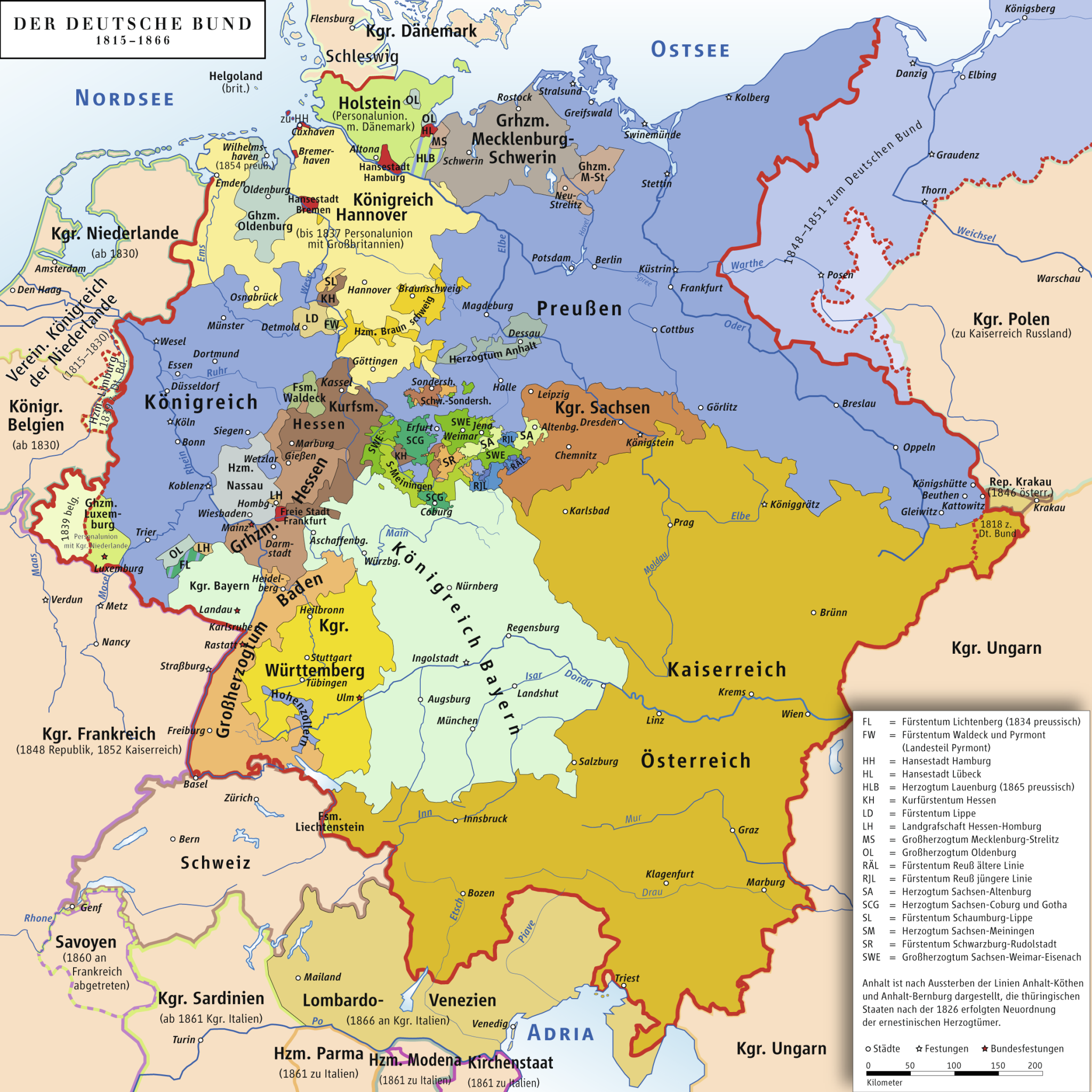
From the Reichsgründung (founding of the Second Empire) onwards, Bavaria ceased to be an independent kingdom even if was nominally an autonomous entity within the new German Empire; to that extent, the tragic fate of Ludwig II was less politically consequential than it might otherwise have been had Bavaria remained an independent kingdom.
Nonetheless, by 1885, Ludwig’s extravagant expenditures were threatening to bankrupt the Bavarian state treasury, his debts amounting to 14 million Marks before his overthrow (the equivalent of 350 million Euros in today’s money), scandalizing his prime minister Johann von Lutz and the entire cabinet (History Channel, “King Ludwig’s Mysterious Death“); far from responding positively to the government’s concerns, Ludwig considered dismissing the cabinet (Ludwig II, Wikipedia) and it was that threat that may have prompted his ministers to act.
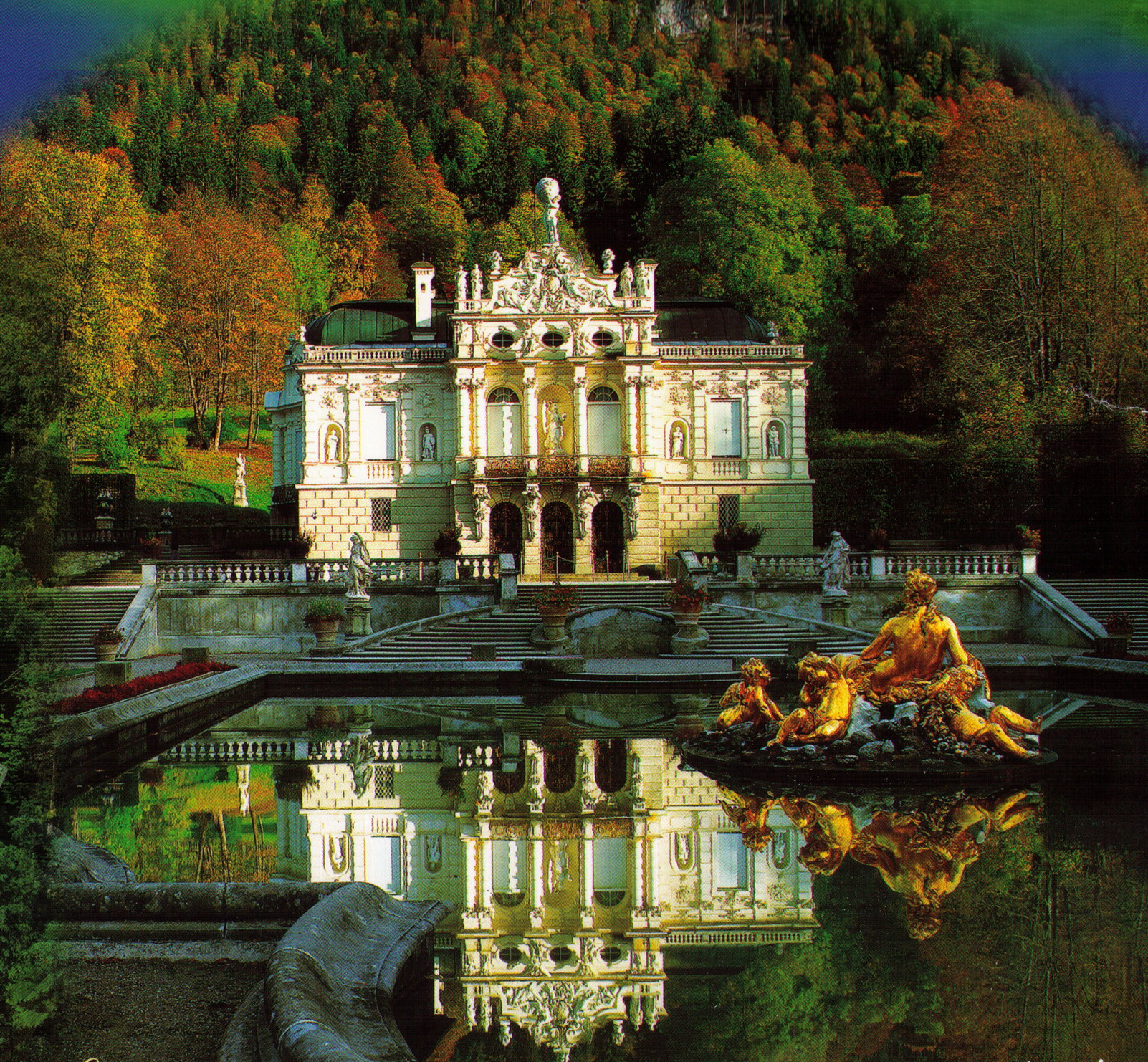
Had Ludwig stopped with Neuschwanstein, perhaps he might have avoided disaster; but he continued with Linderhof and the Herrerchiemsee (his copy of the chateau de Versailles); and his ministers saw no end in sight with the king’s unprecedented building spree; and so a plot was hatched. Ludwig’s prime minister reached out to the king’s uncle Luitpold to take over as regent and Johann von Lutz authorized Graf Maximilian von Holnstein to draft a report declaring Ludwig insane and therefore subject to removal; they hired Dr. Bernhard von Gudden, chief of the Munich asylum, to make the assessment. The government ministers even reached out to Otto von Bismarck, but the Eisenkanzler (now the effective ruler of all of Germany) neither encouraged nor discouraged the conspirators from taking action.
And so on 4 a.m. on 10 June 1886, Honstein and Gudden arrived at Neuschwanstein to deliver the document of deposition to Ludwig and take the king into custody; but peasants and villagers rallied to the king and so it took a military regiment on June 12 to take Ludwig into custody. On the afternoon of June 13, Gudden took Ludwig on a walk through the grounds of Schloß Berg; around 6 p.m., Gudden took Ludwig on another walk but the two were found floating in the Starnberger See several hours later on June 13.
The government issued a report calling Ludwig’s death suicide by drowning but few Bavarians believed it; many believed the king was murdered and the fact that no water was found in Ludwig’s lungs means that he was dead by the time he was submerged in the lake; the fact that his watch stopped at 6:54 p.m. suggests that that was the actual time of his death.
Gräfin Josephine von Wrbna-Kaunitz would later show visitors a Loden coat with two bullet holes in the back, suggesting murder. Another theory is that Ludwig tried to kill Gudden and then killed himself; still another theory is that there was some accident that claimed both men’s lives. Perhaps the unsolved mystery of Ludwig’s death has only enhanced the mystique of the most famous Wittelsbach kings of Bavaria.
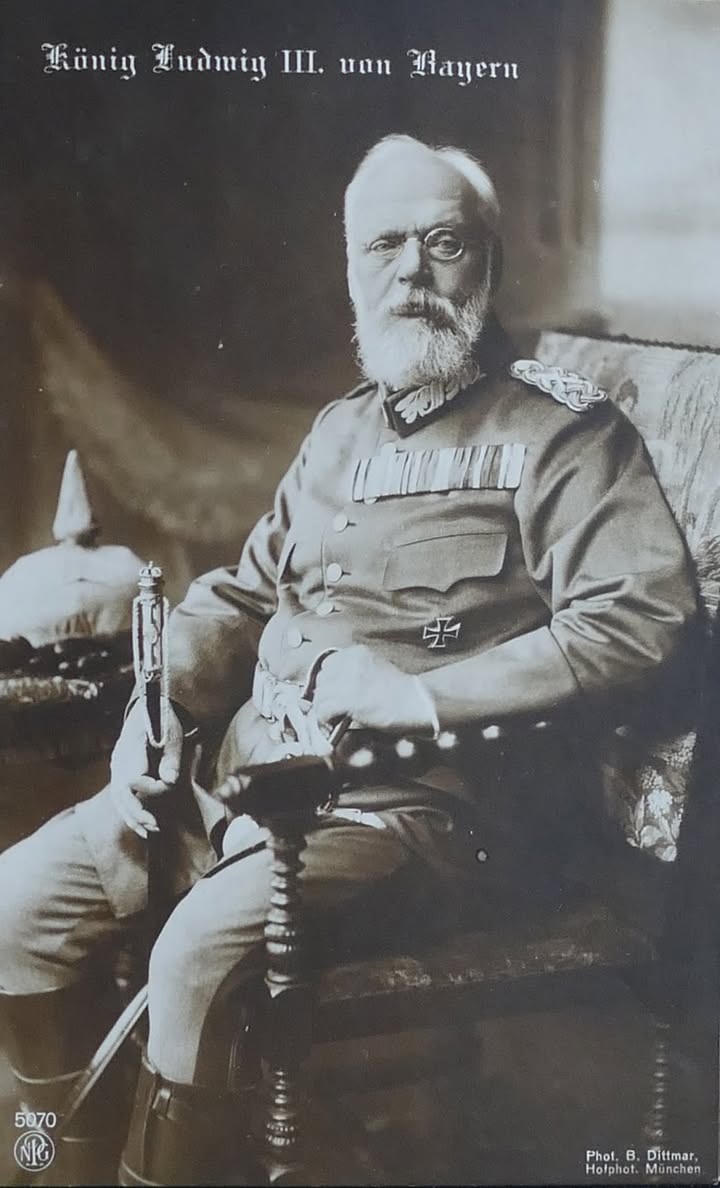
Ludwig II’s cousin (and the son of Prince Luitpold and grandson of Ludwig I) Ludwig III reigned as the last king of Bavaria from 1913 until revolution broke out in 1918 and the Reichstag abolished the Bavarian and German monarchies, bringing 738 years of Wittelsbach rule in Bayern to an end; he died in exile in Hungary in 1921.

In truth, Ludwig II’s record as a ruler was a mixed one to say the least and by conventional standards of rulership, his reign cannot be considered a success; and yet, his building of Neuschwanstein and his other Schlößer has generated billions (whether enumerated in dollars, Deutschemarks or Euros) for Bavaria’s economy and state government. Neuschwanstein has become the iconic image not only of Bavaria but of Germany as a whole and has inspired many other building projects, most notably the fairytale castle at the center of Disneyland in Anaheim (California).
And in saving Richard Wagner from financial ruin (and possibly even an early death), Ludwig helped fund arguably the most influential European cultural figure of the second half of the 19th century.
Ludwig’s story has inspired numerous documentaries and feature films, including Luchino Visconti’s 1973 film “Ludwig” which dramatizes the king’s life, starring Helmut Berger and using Wagner’s music as part of the soundtrack to the movie.
“Ein ewiges Rätsel will ich bleiben mir und anderen” (I will remain a riddle to myself and to others), Ludwig wrote in a letter to the actress Marie Dahn-Haussman (25 April 1876) and this self-description may well be the most apt epitaph for the Märchenkönig whose building of Neuschwanstein has ensured his immortality.
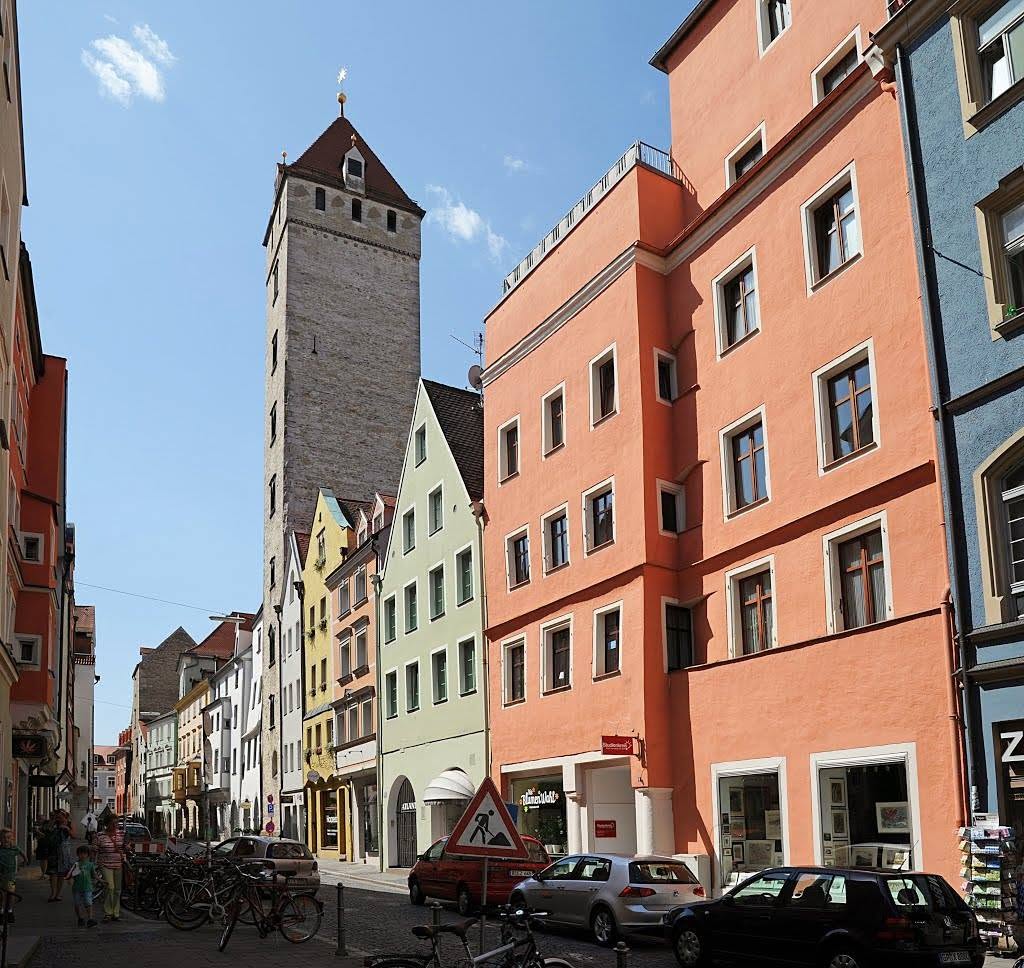
Pauline Park earned her B.A. in philosophy from the University of Wisconsin-Madison, her M.Sc. in European studies from the London School of Economics and Political Science and her Ph.D. from the University of Illinois at Urbana-Champaign; during six weeks in the summer of 1991, she lived in the Golden Tower (Der Goldener Turm) in Regensburg deep in the heart of Bavaria.