Sheela Lambert and the Coalition for Unity & Inclusion
By Pauline Park
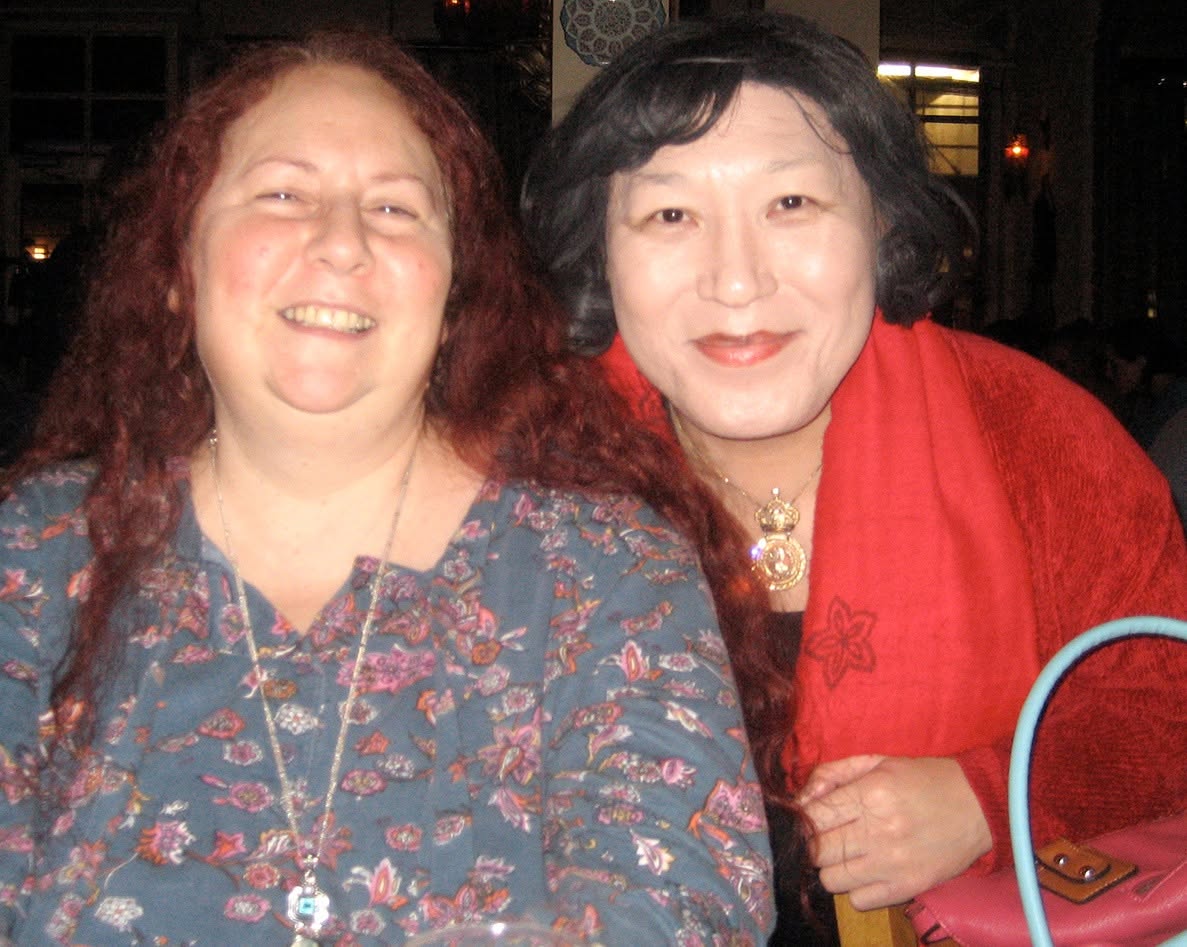
Sheela Lambert (1956 – 2024) was a native New Yorker and a bisexual activist and writer. I first met Sheela not too long after I moved to New York in 1995; I can’t remember the exact date that we first met, but it was after I had co-founded Queens Pride House in 1997 and the New York Association for Gender Rights Advocacy (NYAGRA) in 1998 and after we had launched the campaign for the transgender rights bill in 2000 that was ultimately enacted by the New York City Council in 2002.
So it was sometime in 2000 that Sheela approached me to launched a campaign that we would call the Coalition for Unity & Inclusion (CUI) whose aim was to get all of the leading community organizations and institutions in New York City to change their names from ‘gay and lesbian’ or ‘lesbian and gay’ to the more inclusive ‘lesbian, gay, bisexual and transgender.’
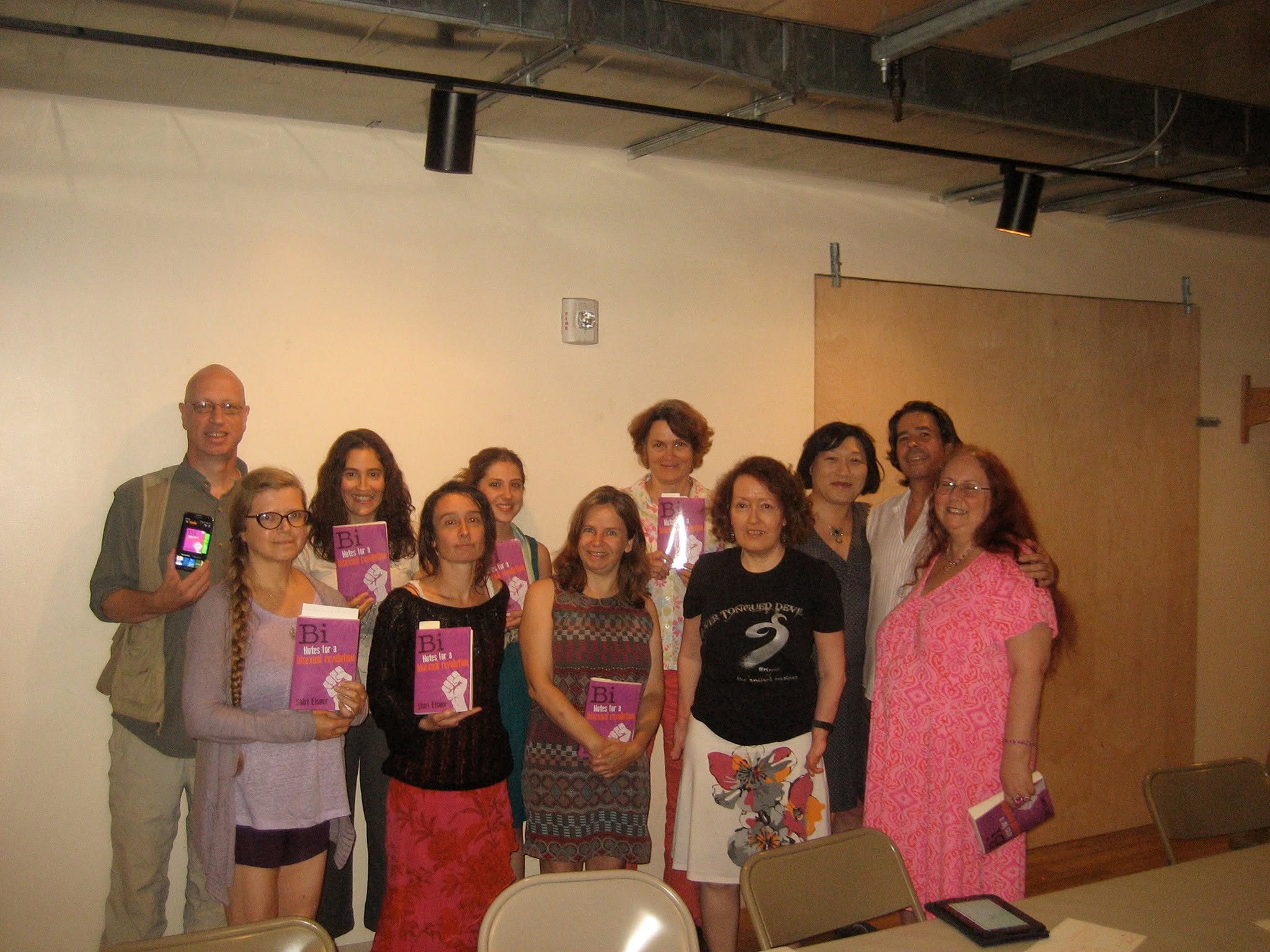
Sheela Lambert at a meeting of the NYC Bi Book Club in Manhattan following a discussion of “Bi: Notes for a Bisexual Revolution” by Shiri Eisner (8.14.13)
Sheela had already established herself as a prominent bisexual activist with activism and community organizing that she described in an interview with Patrick Dunn of the New Haven Pride Center (“Bi+ Talk: Sheela Lambert,” 9 November 2021), including her work creating the Bisexual Book Awards event.
When Sheela approached me in 2000, she expressed her frustration with the Lesbian & Gay Community Services Center in particular, telling me that before she died, she wanted to walk into the Center under a sign that had the word ‘bisexual’ in it. Sheela was refreshingly frank it acknowledging that it was clear to her that it was unlikely that bisexuals alone would be able to get the Center to change its name without bringing transgender into the challenge to the Center’s administration. I told her that I had heard that there were conversations being had internally between the Center’s executive leadership and the Gender Identity Project (GIP) about an organizational name change but that to date those talks had gone nowhere.
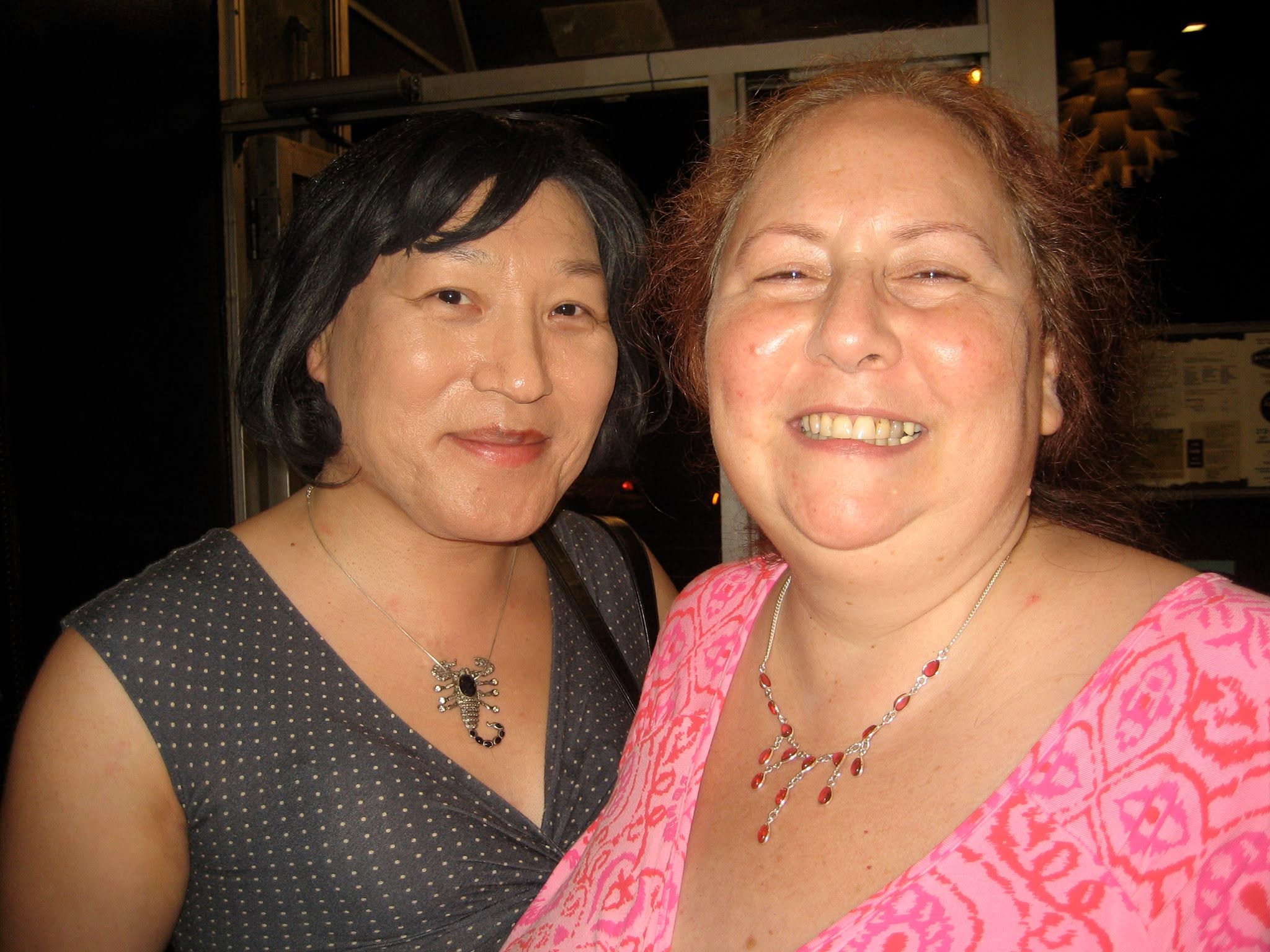
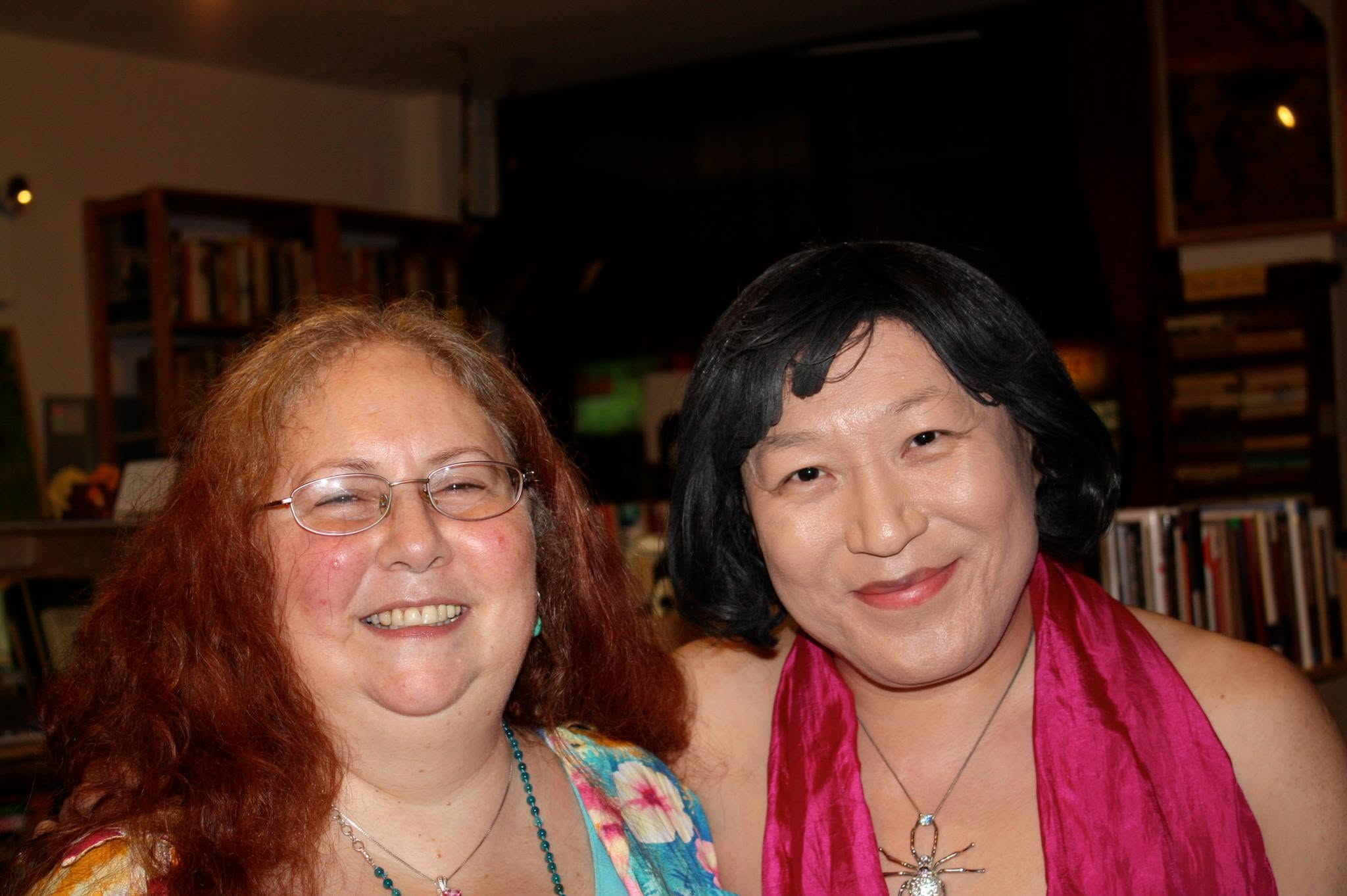
Pauline Park & Sheela Lambert at a meeting of the Bi Book Club NYC in Manhattan (8.14.13)
At the time, I was really preoccupied with leading the campaign for the transgender rights bill, but it occurred to me that the campaign Sheela proposed could easily dovetail with the legislative campaign that I was running. Sheela felt strongly about the Center, the New York City Gay & Lesbian Pride March (run by Heritage of Pride) and the New York Lesbian & Gay Film Festival; we also decided that the New York City Gay & Lesbian Anti-Violence Project (AVP) was another important community organization.
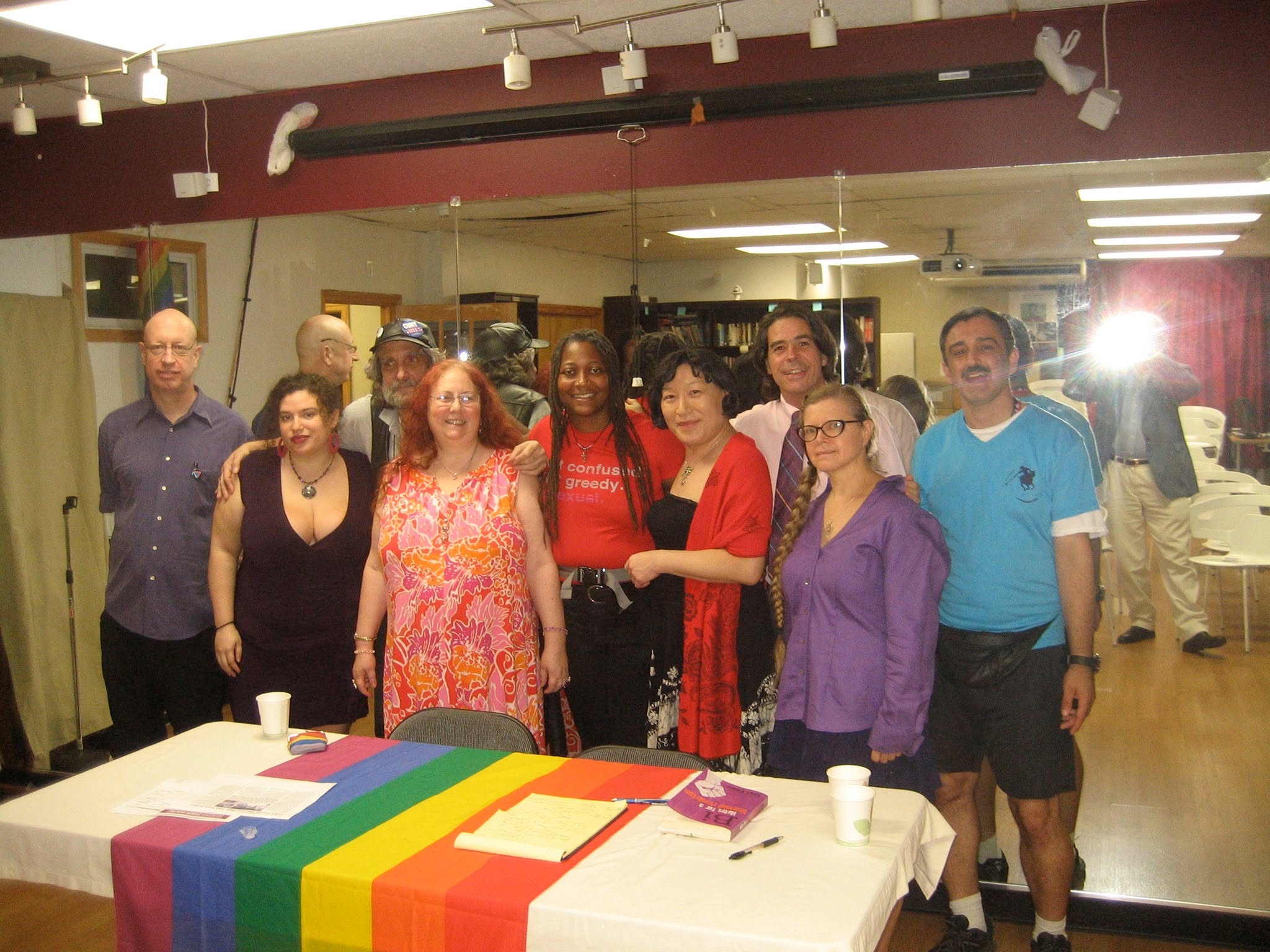
BiRequest co-sponsored the Celebrate Bisexuality Day event at Queens Pride House (9.21.13)
We were successful in getting the Center to change its name to ‘LGBT Community Center’ in 2001 but the Center has failed to credit us with having played a central role in bringing about the name change. The film festival leadership did not need much persuasion to change its name to ‘New York LGBT Film Festival.’ The executive staff of the Anti-Violence Project was not opposed to a name change but there was apparently some resistance from some board members so AVP ultimately decided to drop ‘Lesbian & Gay’ and simply call itself the ‘New York City Anti-Violence Project.’
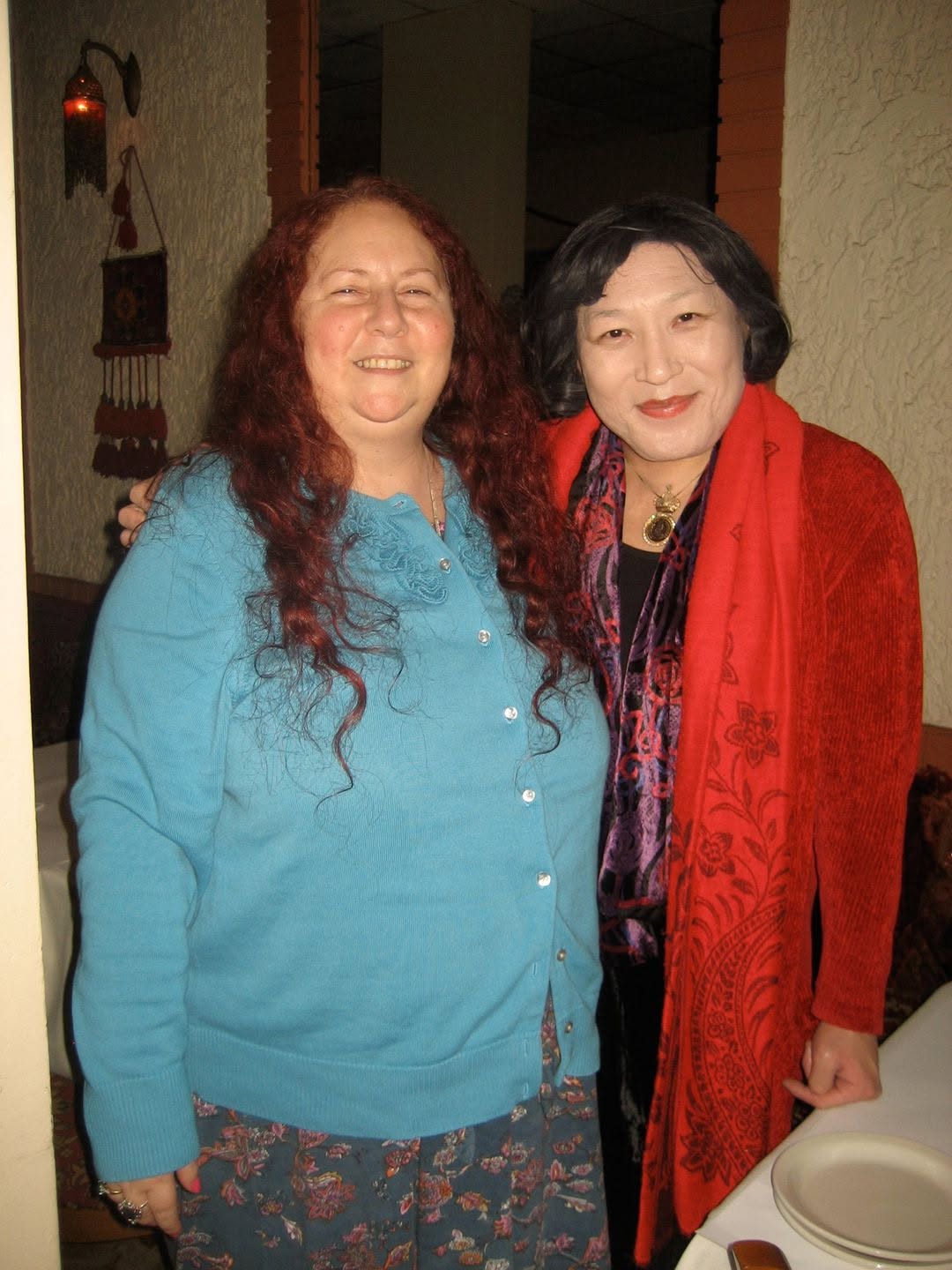
Sheela Lambert & Pauline Park at dinner after a meeting of the NYC Bi Book Club in Manhattan (11.6.13)
Heritage of Pride took some work to persuade but ultimately changed the name of the largest pride parade in the world from ‘New York City Gay & Lesbian Pride March’ to ‘New York City LGBT Pride March’; the irony is that I would become the first openly transgendered grand marshal of the Pride March in 2005 and I was delighted to be the grand marshal of the ‘LGBT’ Pride March.
The New York Lesbian & Gay Film Festival did not require much persuasion to change its name to ‘New York LGBT Film Festival.’ The New York City Anti-Violence Project’s senior staff did not object to a name change but told us there was some resistance at the board of directors level and the board ultimately decided simply to jettison ‘Lesbian & Gay’ and call the organization ‘New York City Anti-Violence Project.’
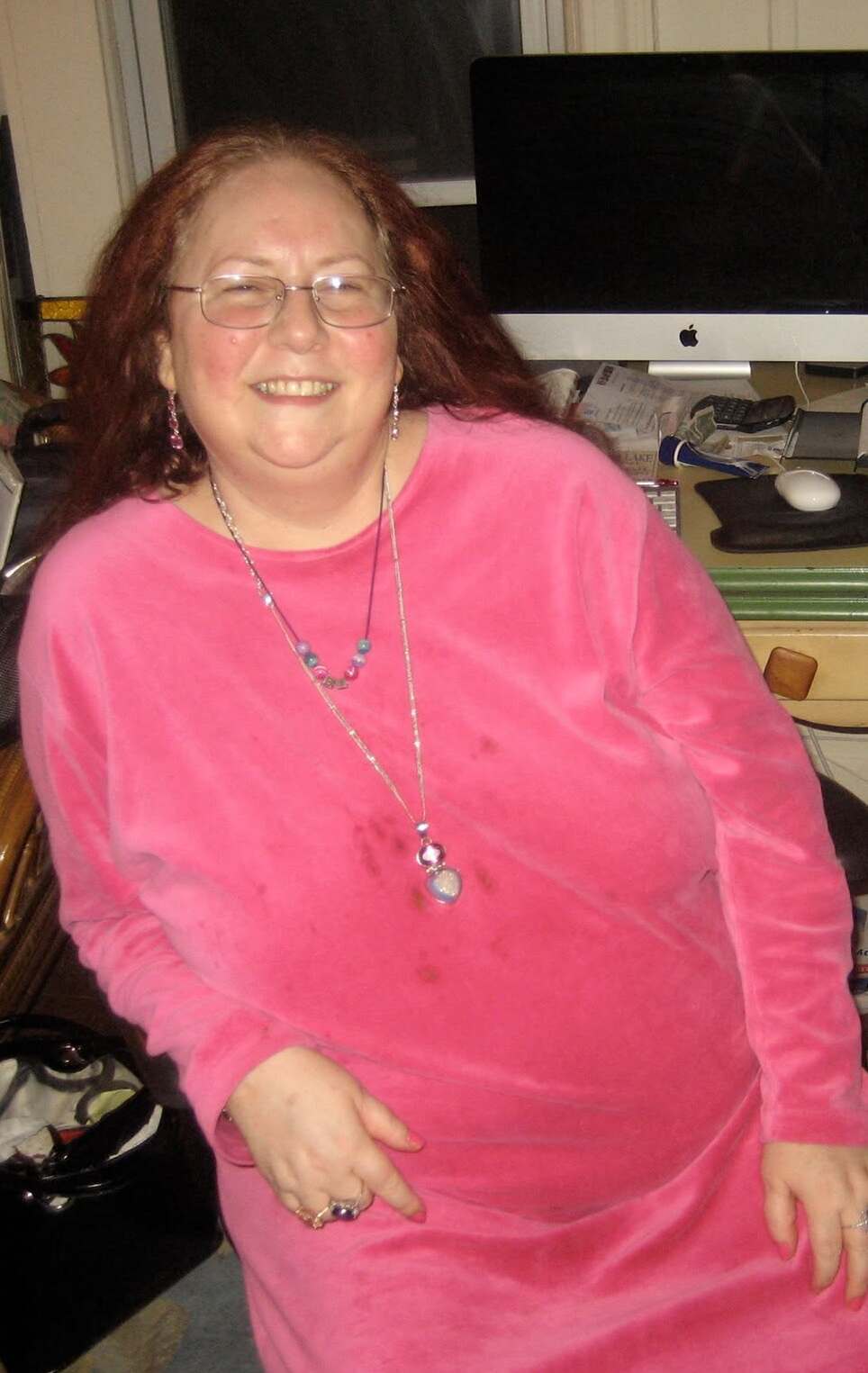
Sheela Lambert chez elle (3.6.14)
Gay Asian & Pacific Islander Men of New York decided simply to eliminate the full name of the organization and call itself ‘GAPIMNY.’ I had actually served on the steering committee in 1999 and 2000 and had persuaded my colleagues to make the organization’s mission transgender-inclusive, so the decision to jettison the group’s full name was consistent with that broadening of its mission.
Some organizations changed their names without our directly contacting them as the national momentum for more inclusive nomenclature gained speed.
GLAAD did what GAPIMNY had done and dropped the original full name ‘Gay & Lesbian Alliance Against Defamation’ and simply go by the acronym GLAAD; Parents & Friends of Lesbians & Gays did the same and now goes by the acronym ‘PFLAG’ alone.
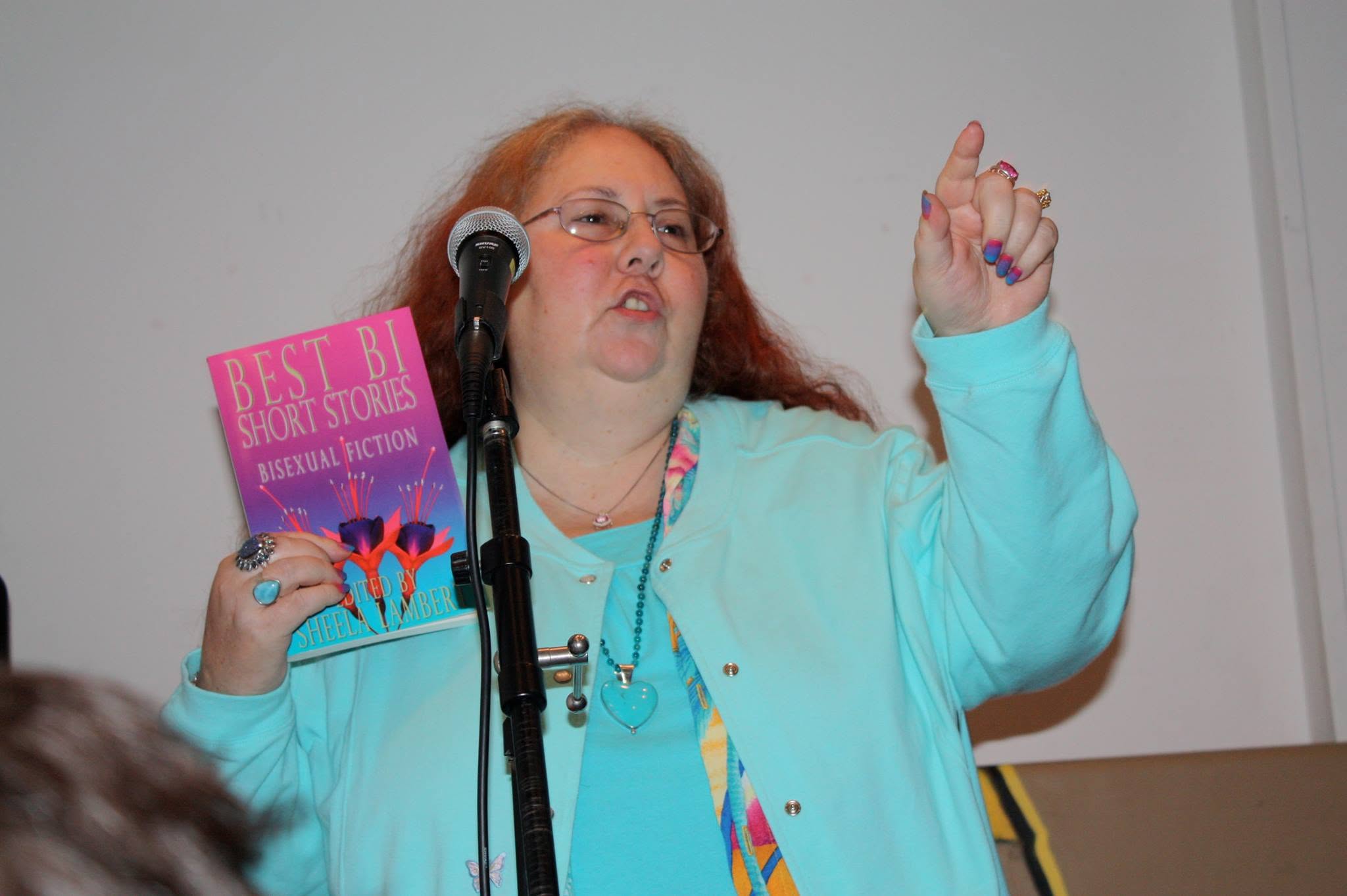
Sheela Lambert organized Queer Fiction Night at Word Up in Washington Heights in Manhattan at which she read from her contribution to “Best Bi Short Stories: Bisexual Fiction” (a book she edited) (9.27.14)
Nomenclature of course is only an outward indication of inclusion and renaming an organization is no guarantee of full bisexual and transgender inclusion in the organization’s work; but it is nonetheless and important step in making an organization or institution fully inclusive.
The story of the successful Coalition for Unity & Inclusion campaign is a small chapter in the long history of the LGBT community and movement in New York and beyond but a significant one nonetheless and it is a tribute to our work that no community organization in New York or probably anywhere in the United States would consider using the non-inclusive ‘gay and lesbian’ or ‘lesbian and gay’ nomenclature. I am not aware of who in other cities and states did similar work but I am quite certain that there were other activists like us who pursued similar campaigns to persuade organizations and institutions in our community to make their organizational names inclusive. I will always remember the work I did with Sheela Lambert and I know she felt that it was some of the most important work she did as a bisexual activist; it is ultimately the story of how two activists with extremely limited resources could bringing about significant change simply by using their voices and their persuasive power to help bring about that change.
Sheela Lambert organized Queer Fiction Night at Word Up in Washington Heights in Manhattan at which she read from her contribution to “Best Bi Short Stories: Bisexual Fiction” (a book she edited) (9.27.14)
Pauline Park is chair of the New York Association for Gender Rights Advocacy (NYAGRA), which she co-founded in 1998. Park led the campaign for passage of the transgender rights law enacted by the New York City Council in 2002 and served on the working group that helped to draft guidelines — adopted by the Commission on Human Rights in December 2004 — for implementation of the new statute. In March 2011, Park co-founded New York City Queers Against Israeli Apartheid (NYC QAIA) and in January 2012, she participated in the first US LGBTQ delegation to Palestine, a seven-day tour of the West Bank and Israel that included meetings with LGBT- and non-LGBT Palestinians and Israelis. Park did her B.A. in philosophy at the University of Wisconsin-Madison, her M.Sc. in European studies at the London School of Economics and her Ph.D. in political science at the University of Illinois at Urbana-Champaign.