Sir Edmund Trelawny Backhouse & the conspiracy to overthrow the Qing
by Pauline Park
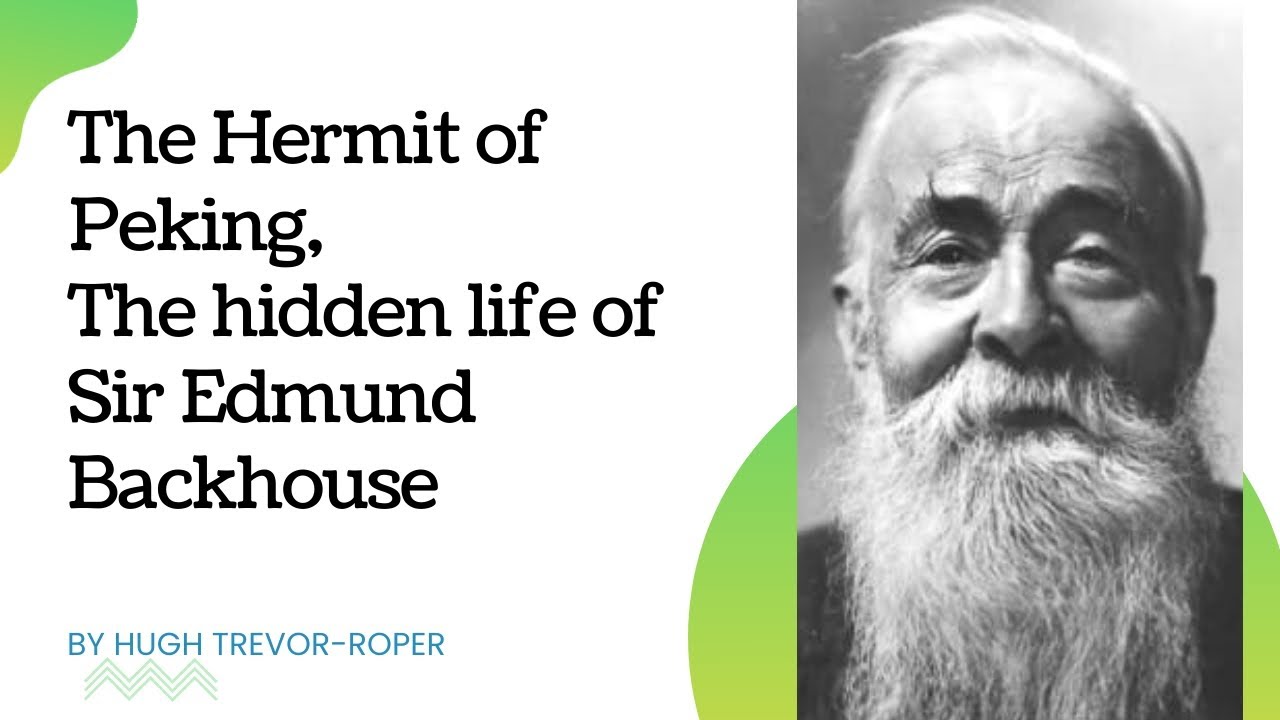
Sir Edmund Trelawny Backhouse is an obscure but fascinating figure whose claim to fame is a book he wrote that was the centerpiece of the conspiracy to overthrow the tottering Qing dynasty.
Backhouse was born into a Quaker family in Darlington on 20 October 1873, the son of Sir Jonathan Backhouse, a director of Barclays Bank; the eldest son, Edmund would eventually inherit the baronetcy and become the second baronet in the family line; but he was the black sheep of the family on account the homosexuality his father despised and — no doubt, given the accounts of Edmund’s long history of playing fast and loose with the facts — which would get him into trouble on numerous occasions over the course of his long life.
In “Dragon Lady: The Life and Legend of the Last Empress of China,” Sterling Seagrave wrote of Backhouse, “There was no way that Lim Boon-keng or anyone else could compete with the eloquent Backhouse when it came to poisoning the dowager’s reputation and slyly filling in the pornographic details. What nobody knew was that Edmund was the product of a bizarre and miserable childhood that would have made fascinating study for a Freudian psychiatrist. He complained bitterly that ‘my childish years were ideally unhappy; for I was born of wealthy parents who had everything they wanted and were miserable… I heard not a kind word nor received a grudging dole of sympathybut hate and hate alone throughout the live long days, the while [my mother] mocked my childish tears.’ ‘Her rages,’ he said, ‘were veritable cataclysms.’ His father once thrashed him, and his younger brother Roger ‘was always very rude to me.’ They all hated him because not only was Edmund a liar, a cheat, and a thief, but at the same time ostentatiously homosexual, a combination that seems to have been a bit more than his parents could handle. None of these attributes was unusual among his contemporaries, singly or in combination, but Edmund had the additional disadvantage of being functionally insane. H was brilliant but highly unstable, a true exotic with an extraordinary fantasy world and long bouts of psychotic depression” (Sterling Seagrave, “Dragon Lady: The Life and Legend of the Last Empress of China,” Alfred A. Knopf, New York, 1992, p. 282).
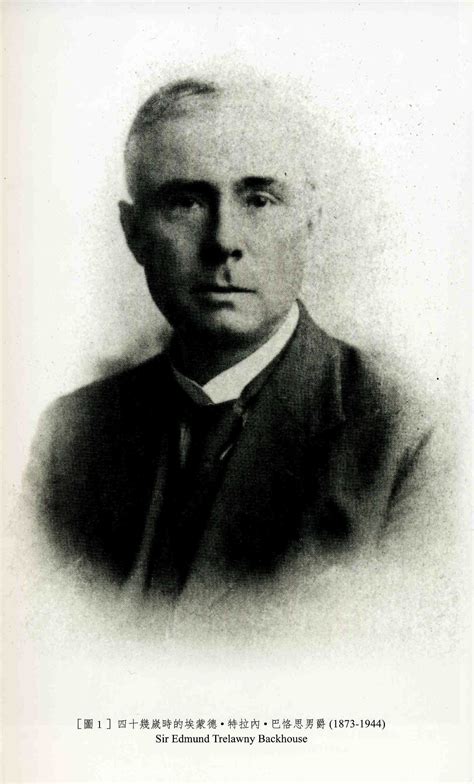
The young Edmund went to Oxford but did not finish his degree and the debts he accumulated forced his father to bail him out discreetly so as to avoid a scandal that could have tainted the family reputation. Edmund abruptly left Oxford in 1898 without a degree and that lack of the most basic academic credential would later impede him in his ambition to secure the chair in Chinese studies at the university.
Despite the lack of academic credentials, Backhouse would write or co-author five important books (bibliography via Wikipedia):
- Backhouse, Edmund; Bland, J. O. P. (1910). China Under the Empress Dowager: Being the History of the Life and Times of Tzŭ Hsi. Retrieved 1 April2013. China under the empress dowager
- Backhouse, Edmund; Bland, John Otway Percy (1914). Annals & memoirs of the court of Peking: (from the 16th to the 20th century) (PDF). London: Heinemann. Archived from the original on 28 June 2014. Retrieved 1 April2013.
- Backhouse, Sir Edmund; Bland, J. O. P. (1913). “Secret Annals of the Manchu Court 1. The Story of the Precious Pearl”. The Atlantic, Volume 112. Atlantic Monthly Co. p. 629. Retrieved 1 September 2014.
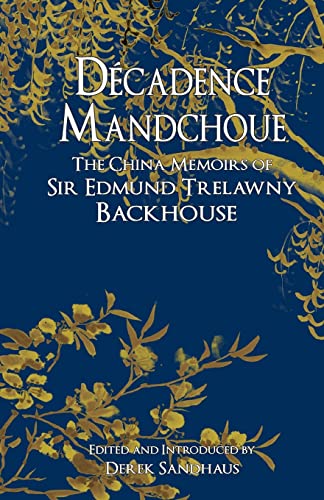
- Backhouse, Sir Edmund (2011). Décadence Mandchoue. Hong Kong: Earnshaw Books. ISBN 978-9881944511.
- Backhouse, Edmund Trelawny (2022) [1945]. Hoeppli, Reinhard (ed.). The Dead Past. Sydney: Alchemie Books. ISBN 978-0645852714.
In fact, these books would profoundly influence British and European views of Cixi, the empress dowager who effectively ruled China for most of the last half century of the Qing dynasty.
Alexander Boyd of China Books Review spoke with Jeremiah Jenne about the extraordinary claim that Backhouse made that he had a long affair with the empress dowager Cixi (“‘Décadence Mandchoue: the wild (and almost certainly fictional) affair between Sir Edmund Backhouse and Empress Dowager Cixi“).
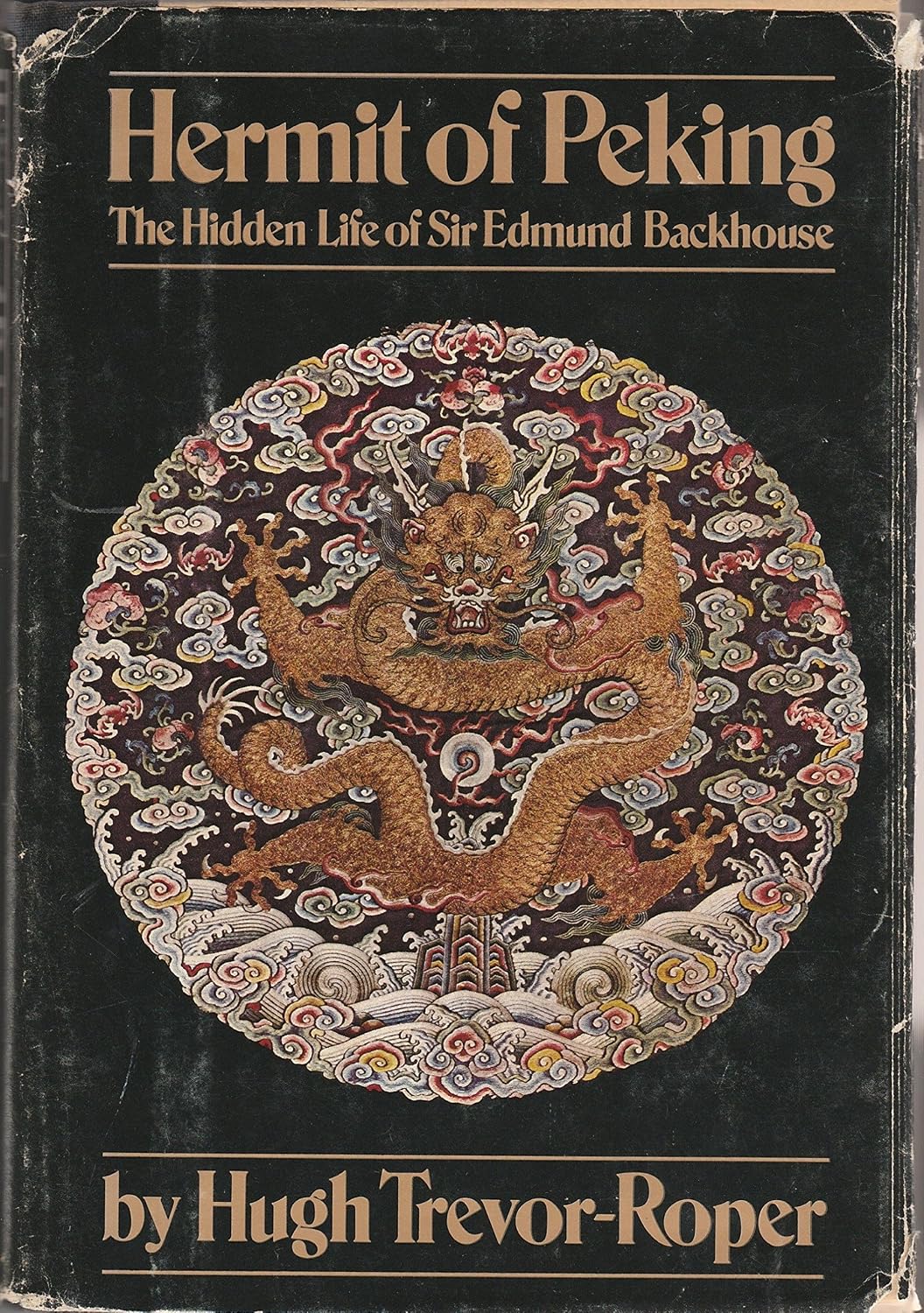
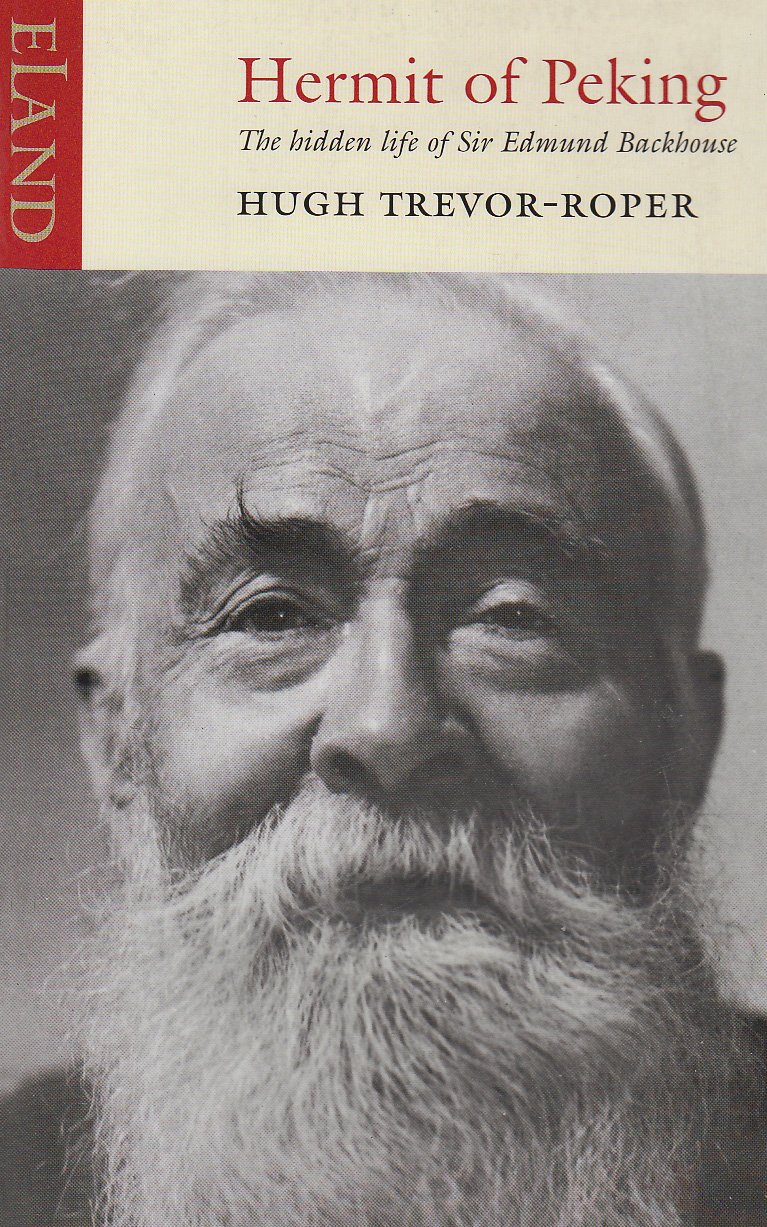
Hugh Trevor-Roper wrote a biography of Backhouse that goes into great detail in examining the authenticity of the documents Backhouse used in writing his books and the claims he made, the noted historian concluding that Backhouse was “a confidence man with few equals” (Hugh Trevor-Roper, “Hermit of Peking: The Hidden Life of Sir Edmund Backhouse,” Alfred A. Knopf, New York, 1977).
The origin of Trevor-Roper’s book is itself a key part of the drama of the life of Sir Edmund Backhouse. Switzerland appointed Dr. Reinhard Hoeppli honorary consul general in Beijing in January 1942 when the Swiss government took over consular services for American, British and Dutch nationals in Japanese-occupied territories — which by that point included virtually all of the east coast of China.
The Swiss physician who specialized in parasitology described Backhouse as someone who “still harboured a strong sexuality and who, after some external inhibitions had been overcome, revealed with lascivious pleasure the erotic part of his personality. In such moments, he presented occasionally the very picture of an old satyr enjoying happy memories” (Trevor-Roper, p. 228). Conversations with Hoeppli inspired Backhouse to write his two-volume memoir, “Décadence Mandchoue” but “they were grossly, obsessively obscene,” writes Trevor-Roper and Hoeppli realized the memoirs could not be published in 1943; in January 1973 — 40 years after Backhouse had completed his memoirs and a month before Hoeppli’s death — the Swiss physician passed the enormously long texts to the director of the Swiss medical institute of which he was a member with the intention that they be housed in a library. Trevor-Roper read the entire manuscript and decided to attempt to determine the veracity of the claims made in it.
Trevor-Roper notes with apparent disgust that “Décadence Mandchoue” “opens in a high-class homosexual brothel,” declaring, “it is a subject of which the reader will have more than enough long before the end of the book” (ibid., p. 249).
Most importantly, Trevor-Roper concludes regarding the diary of Ching-shan — the crucial element in Backhouse’s entire narrative about the court of the empress dowager Cixi: “When a man, to prove the authenticity of a disputed document, fabricates imaginary corroboration, we can take it, first, that the disputed document is a forgery, and secondly, that he knows it to be a forgery: in effect, that he forged it. The imaginary conversations with Jung-u, the imaginary diaries of Li Lien-ying, are circumstantial but sufficient proof not only that the diary of Ching-shan is a forgery but also that Backhouse himself forged it” (ibid., p. 273). “Alas, it must be admitted, Backhouse’s ‘memoirs’ are not an edifying work. They are a pornographic novelette” — but he was “coherent and sane” when he wrote them, Trevor-Roper concludes with evident disgust (p. 274), adding, “He lived in a world of imagination” (p. 275), adds Trevor-Roper, attributing to Backhouse “cunning and sang-froid.” Trevor-Roper accuses Backhouse of intellectual ‘snobisme’ and “essentially empty elitism” (p. 280). But “Backhouse’s frauds were not inspired by need or greed” (p. 290); instead, Trevor-Roper concludes, Backhouse was driven by “Love of fame… even notoriety… a desire to smooth his way into a coveted chair… a compulsive extravagance…” (p. 291). “I have described him as an aesthete who repudiated the materialism, the philistinism, of Victorian England, and took refuge, mentally at least, in the spiritually and intellectually empty elitism, the social and sexual non-confirmity, of the 1890s. This trivial aestheticism, this sense of superiority, this hatred of Western materialism, continued to be the central threat of his life in Peking. As the outer world became more and more distateseful to him, he retreated ever further into personal seclusion, an inner citadel” (p. 294).
Trevor-Roper even goes so far as to claim that Backhouse eventually became a “spiritual fascist” and transferred his admiration to Nazi Germany, according to Hoeppli’s recollections of conversations with Backhouse and passages edited out of “Décadence Mandchoue” by the Swiss doctor (p. 295).
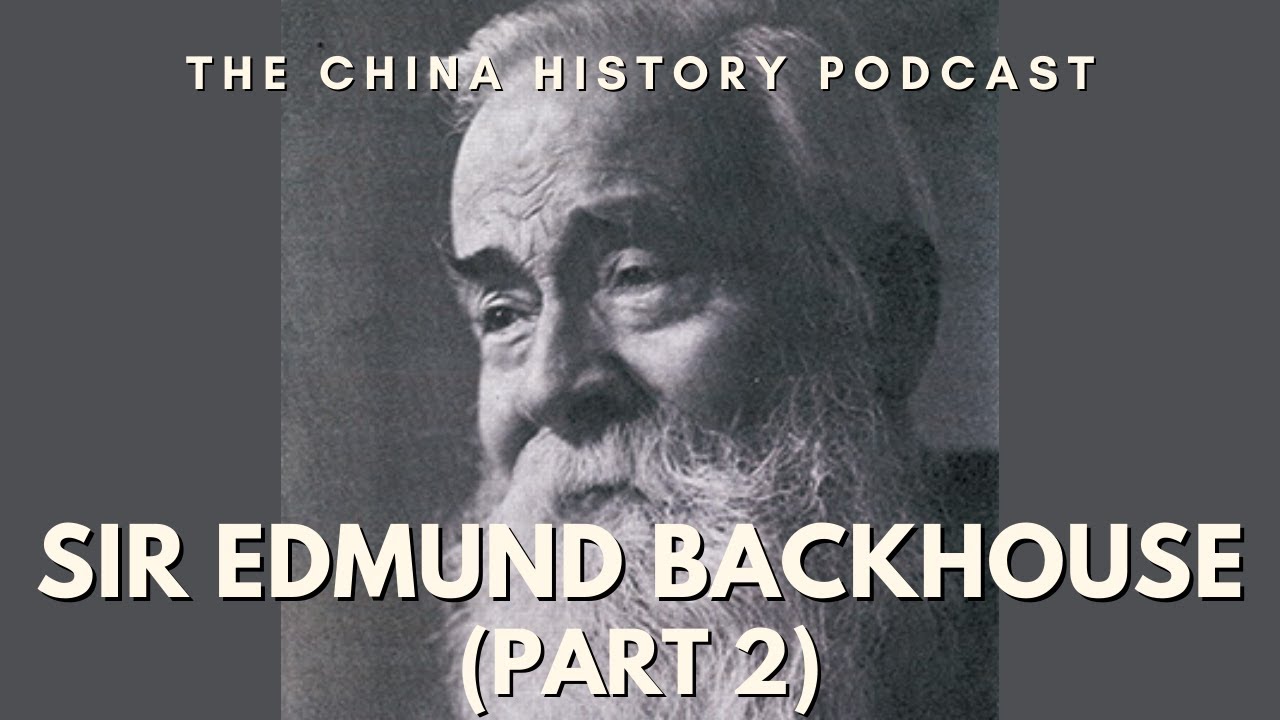
Laszlo Montgomery has a three-part exploration of Backhouse’s life and career in “The China History Podcast” series; in it, Montgomery concludes that Backhouse was a fabulist and a con man but he also notes that Hugh Trevor-Roper was a notorious homophobe and was clearly revolted by Backhouse’s homosexuality. Montgomery also notes that Trevor-Roper was in a sense hoist on his own pétard: the Hitler diaries that the historian declared authentic were determined to be a forgery.
As for Backhouse’s imaginary relationship with the empress dowager, “My intercourse with Tzu Hi started in 1902 and continued until hear death. I had kept an unusually close record of my secret association with the empress and others, possessing notes and messages writte to me by Her Majesty, but had the misfortune to lose all these manuscripts and papers,” Sterling Seagrave quotes Backhouse as writing. “The extravagance of this wanton sexual burlesque with the dowager and the grotesque details of their encounters made it painfully apparent that they are the inflamed sexual fantasy of a mind completely unhinged. What began many decades earlier as ingenious, mischievous satire — disguised as history — now degenerated into lunatic graffiti” (ibid., p. 286).
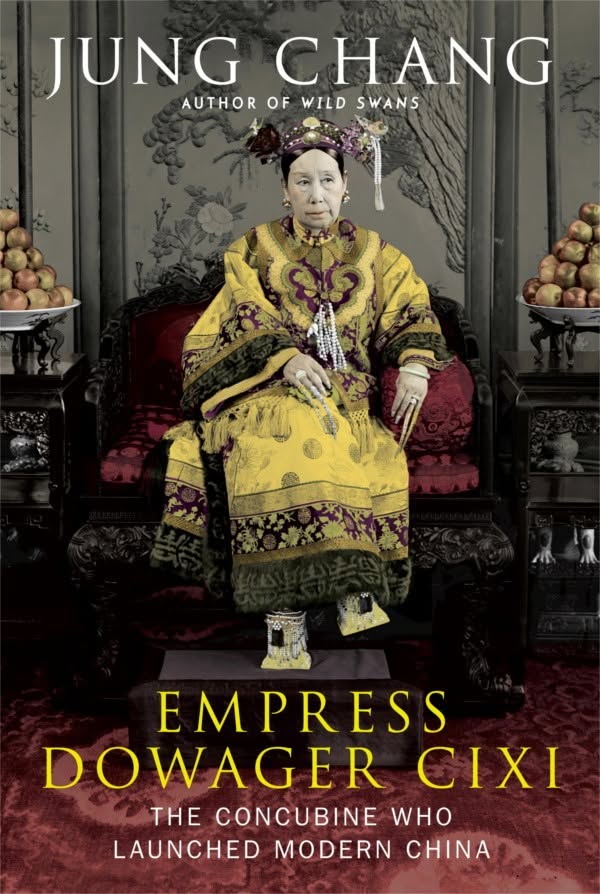
Kang Yuwei (‘Wild Fox Kang’), George Morrison, J.O.P. Bland and the Times of London all joined Backhouse in a conspiracy to blacken the empress dowager’s name and create the false impression that Cixi was primarily or even solely responsible for the violent cataclysm of the Boxer Rebellion of 1900; Sterling Seagrave and Jung Chang have both effectively exploded that myth (Jung Chang,”Empress Dowager Cixi: The Concubine Who Launched Modern China,” Alfred A. Knopf, New York, 2013). The
So what can we conclude of the author of “Décadence Mandchoue”…?
Backhouse was clearly a con man even if an admittedly charming con artist; and yet, he was also an accomplished linguist and at least some of what he donated to the Bodleian Library was of inestimable value despite the donation of forged documents along with the treasures. Trevor-Roper’s description of Backhouse as a “spiritual fascist” seems to be part of an attempt by the homophobic historian to turn Backhouse into something of a Nazi which prompts some skepticism on my part; but Backhouse undoubtedly engaged in repeated behavior which was profoundly dishonest even if not primarily driven by greed.
What is most ambiguous is the role that Backhouse played in relation to the British imperialist incursions in China; it is true that he worked for the arch imperialist George Morrison but Backhouse repeatedly tried to escape Morrison’s control. In the end, Backhouse strikes me as an exceptionally talented linguist and an exceptionally neurotic fabulist who could have produced much more of value had he been able to direct his talents into more positive channels; but he is without doubt one of the most colorful characters produced by the British encounter with Qing China.
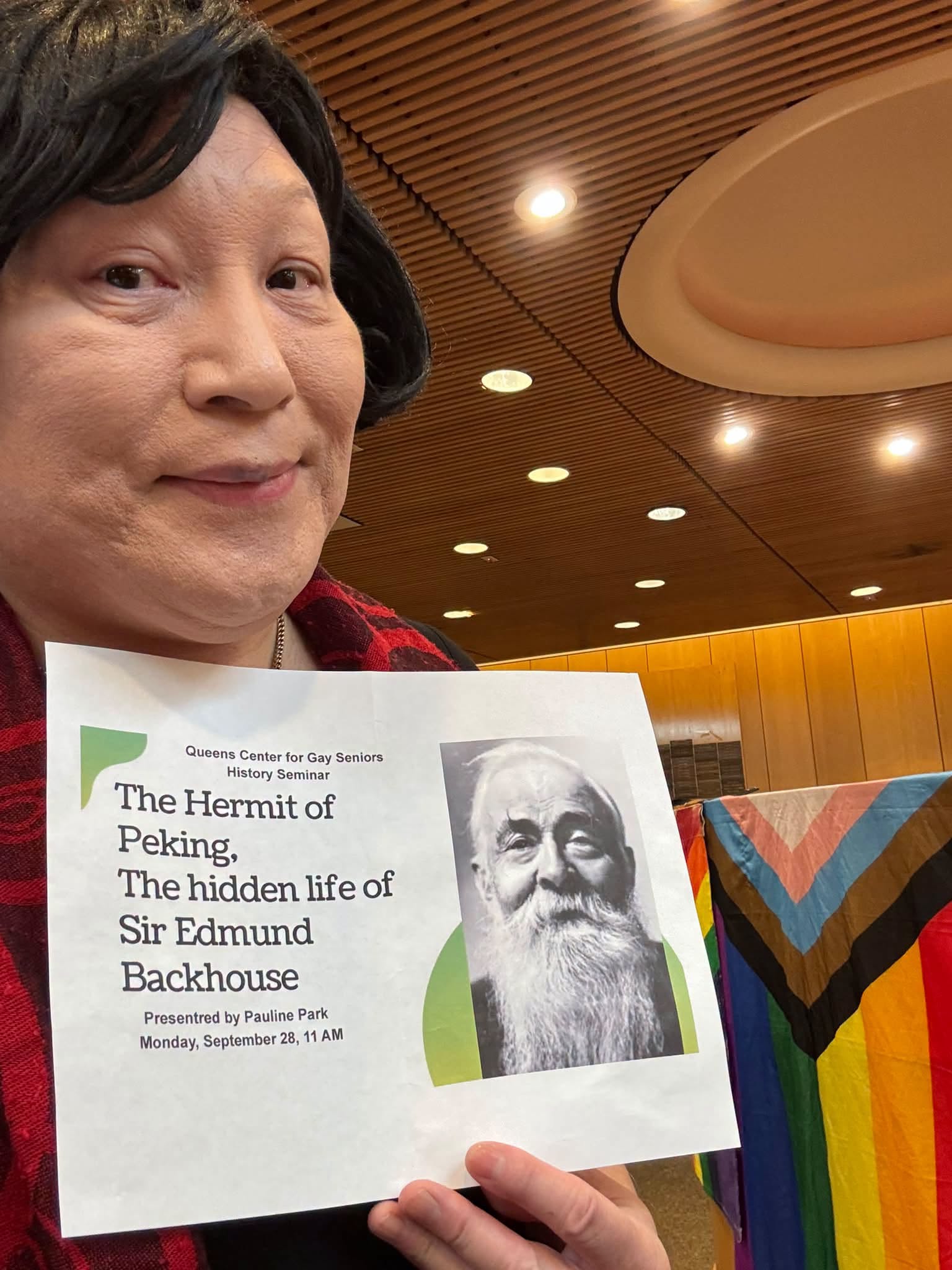
Pauline Park received her B.A. in philosophy from the University of Wisconsin-Madison and her M.Sc. in European studies from the London School of Economics & Political Science; she earned her Ph.D. in political science from the University of Illinois at Urbana-Champaign.