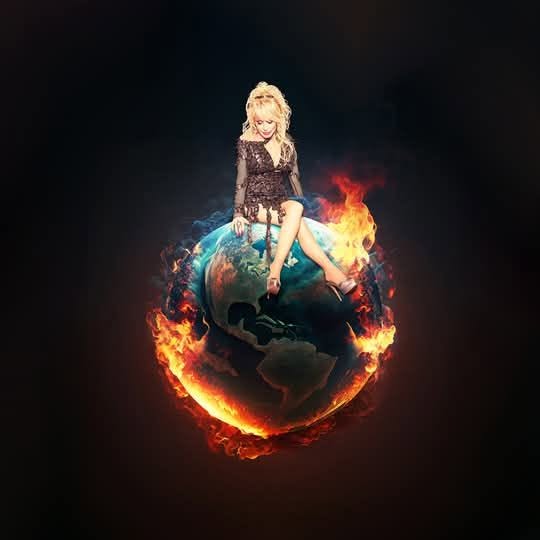
Dolly Parton was our fairy godmother
by Pauline Park
Dolly Parton died of cancer on 25 August 2026. I was actually in a group meeting at my local senior center that Tuesday and I remember the moment when the woman facilitating the group session announced it, with “Jolene” playing in the background.
I’ve never been particularly interested in country music but I love Dolly Parton. Dolly not only transcended the ‘country & western’ musical genre, she was the rare figure who appealed to Americans across all political divisions. Donald Trump responded to the news of her death (announced by her nephew) by ordering flags flown at half mast from federal government buildings. Newspapers across the country and around the world put Dolly on their front pages. Celebrites who knew her and had worked with her posted condolences as did those who didn’t know her personally.
Dolly’s death made front pages of newspapers across the country and around the world.
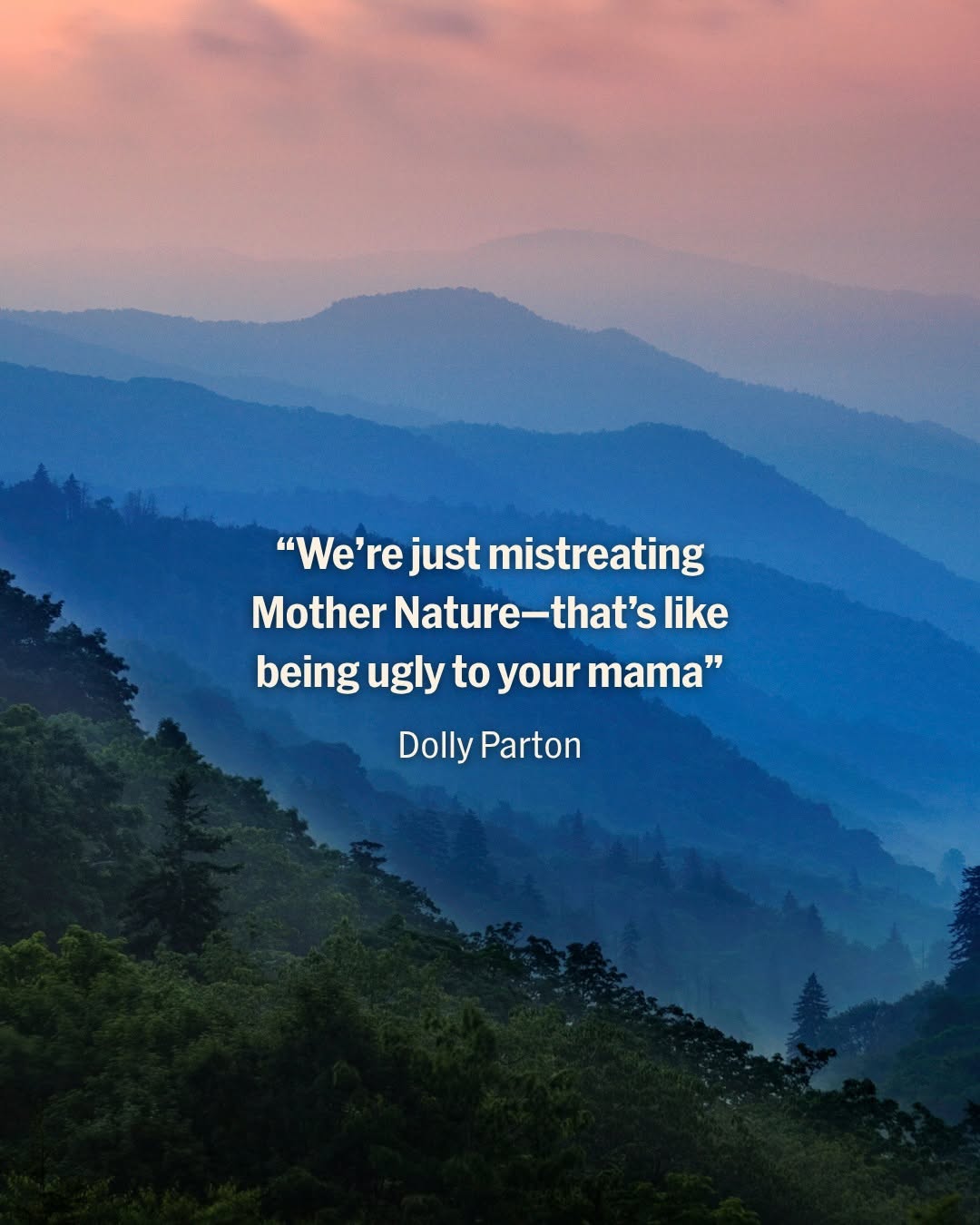
The day after Dolly’s death, the Wilderness Society posted (8.26.26):
“Dolly Parton’s deep connection to the Great Smoky Mountains inspired a lifelong appreciation for nature, community and giving back. In a National Geographic interview, Dolly urged people to take better care of the natural world, saying, “We should pay more attention. We’re just mistreating Mother Nature — that’s like being ugly to your mama. We need to take better care of the things that God gave us freely. And that we’re so freely messing up.”
As we remember Dolly’s extraordinary life, we’re also reminded why protecting the places that inspire us matters, so wildlife can thrive, future generations can make memories of their own and everyone can experience the freedom of the outdoors. 💚 Rest in peace, Dolly.
Even the billionaire J.K. Rowling posted a tribute to Dolly. The irony of Rowling’s post was not lost on members of the lesbian, gay, bisexual, transgender and queer (LGBTQ) community, given her relentless attacks on the transgender community. I posted about Rowling’s tribute to Parton on my Facebook page and something extraordinary happened: the post went ‘viral,’ garnering more than 3,700 views — rare for me, especially since Facebook began shadow banning me over my Palestine posts.
In stark contrast to the billionaire “Harry Potter” creator’s vicious transphobia, Dolly Parton was a stalwart supporter of the entire LGBTQ community — including the ‘T’ in ‘LGBTQ.’ In fact, Dolly’s long-term chauffeur was a transman.
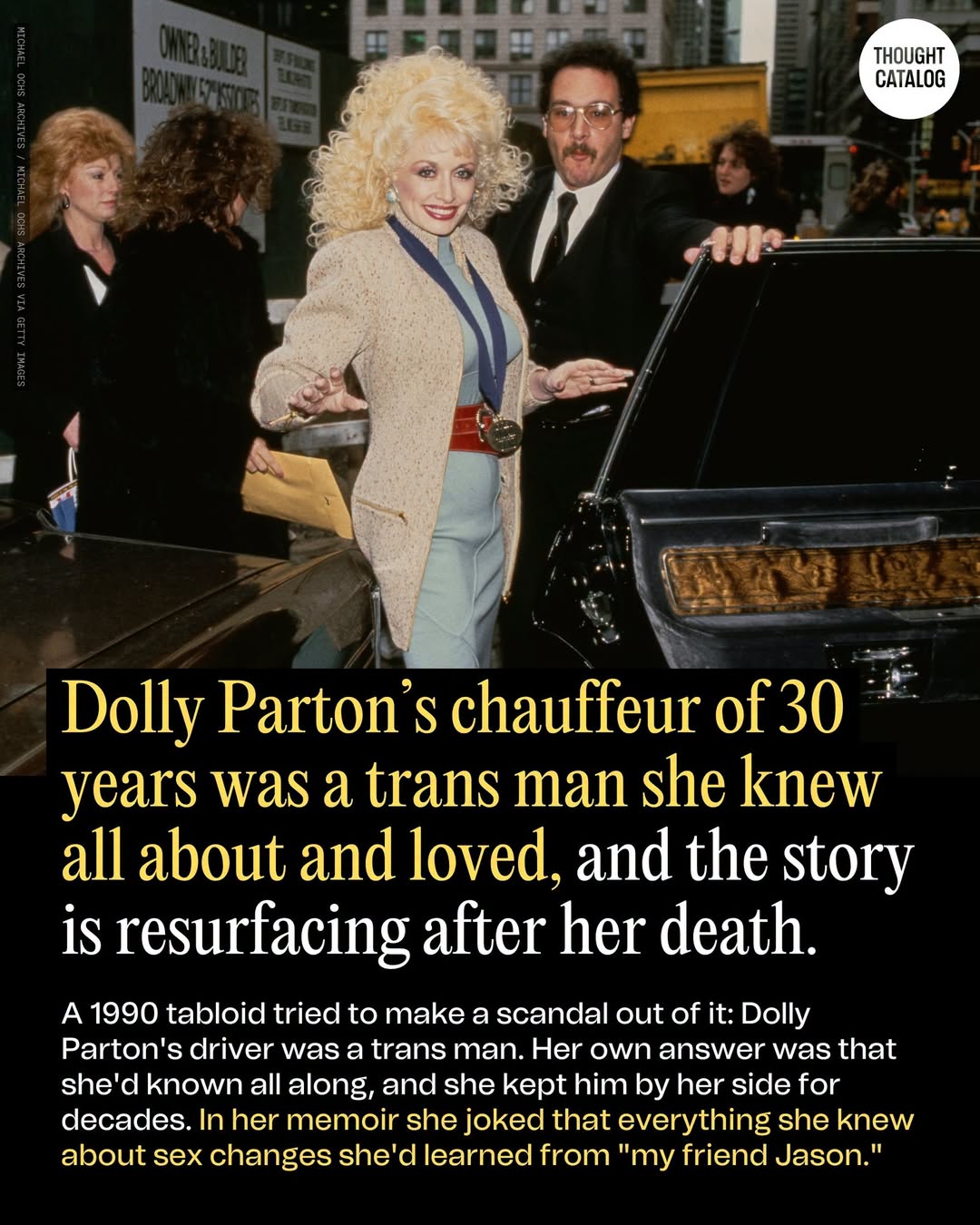
As Thought Catalog reported after Dolly’s death, “Jason Pirro drove for and assisted Dolly Parton for more than 30 years, a working relationship that outlasted the 1990 tabloid story that tried to expose him. That July, the supermarket tabloid Star ran a “sex change shocker” about a trans man in Dolly’s limo, using the deadnaming, exploitative language of the era. Pirro’s own words in the piece were unbothered: “Dolly has been good to me… Dolly knows all about me.” Trans community publications quickly reclaimed the story. The XX Club, a Hartford support group, ran it in the August 1990 issue of its newsletter Twenty Minutes, and Lou Sullivan’s pioneering FTM Newsletter preserved similar material as rare proof of a major star’s acceptance at a time of almost no trans visibility. Sullivan died of AIDS-related complications in 1991. Parton kept Pirro close long after. She thanked him by name in the liner notes of her 2016 album “Pure & Simple” and credited him in her 2023 book “Behind the Seams.” In her 1994 memoir she wrote that if she hadn’t been a woman she’d have been a drag queen, and that everything she knew “about sex-change operations” she learned from her good friend Jason. Parton died Tuesday, Aug. 25, at 80. In the days since, queer and trans fans have circulated Pirro’s story again as one more piece of a legacy she spent decades living out loud.”
But Dolly wasn’t without her critics; two days after her death, on August 27, the Vocal Politics Facebook page posted this critique:
 But here is the part almost nobody knows. For 65 years, those 28 souls lay in a mass grave at Holy Cross Cemetery in Fresno, beneath one small, blank headstone. No names. Nothing.
“Organized labor is celebrating the life and legacy of an artist who championed working women and carried a union card for almost 60 years. Dolly Parton, the brilliant songwriter and beloved country singer who has died at age 80, wrote one of the great anthems of the American working class. The title song from 9 to 5, the 1980 classic about battling gender inequity in the workplace that starred Parton, Jane Fonda, and Lily Tomlin, spoke so much truth that it became a hit on the pop and country charts, gained an Academy Award nomination for Best Original Song, and collected two Grammys. Workers everywhere knew what Parton meant when she sang about “barely gettin’ by, it’s all takin’ and no givin’,” and complained, “They just use your mind and they never give you credit. It’s enough to drive you crazy if you let it.” That song appeared on a remarkable solo album by Parton, “9 to 5” and “Odd Jobs,” which also included songs such as “Working Girl” and “Poor Folks Town” by Parton, along with a poignant cover of
“Deportee (Plane Wreck at Los Gatos,” Woody Guthrie’s reflection on the racist treatment of migrant farm workers.
The album’s title track warned, “It’s a rich man’s game no matter what they call it. And you spend your life puttin’ money in his wallet.” It also reminded working women, “There’s a better life and you think about it, don’t you?”
So it came as no surprise that the news of Parton’s death on Tuesday elicited heartfelt expressions of mourning — and respect — from unions that counted her as one of their own.
“Dolly Parton knew what it was like to struggle as she fought for working families her whole career,” recalled the AFL-CIO. “From providing free books to kids to giving working women our ‘9 to 5’ anthem, she was an icon and an inspiration. Rest in power to our union sister. We will always love you.”
Parton was, indeed, a union sister for the better part of 60 years — carrying the card of multiple labor organizations that on Tuesday celebrated the talent and humanity that earned the country singer, actress, and philanthropist universal admiration.
“Rest in peace, Dolly. Thank you for the music and the solidarity,” declared the American Federation of Musicians of the United States and Canada (AFM), the AFL-CIO-affiliated labor union that represents 70,000 professional singers and players, including Parton. AFM recalled a member whose “influence went far beyond the boundaries of country music, but she never lost track of who she was and her values.”
“Before she was an icon, Dolly was a working musician,” explained AFM International president Tino Gagliardi, who got his start as a New York–based trumpet player. “Dolly never forgot the musicians who helped bring her music to life. By standing firm for solidarity and treating every player with dignity, she elevated our entire profession.”
Dave Pomeroy, the bass player who serves as president of the AFM’s powerful Local 257 in Nashville, noted, “Throughout her 58 years as a proud member in good standing of Local 257, she set the gold standard for supporting her band and fellow musicians,” he recalled. “Dolly and her team consistently filed AFM union contracts for gigs, sessions, and tours, ensuring that the bands, singers, and studio musicians working alongside her received the benefits of union membership.”
Similar sentiments were expressed by entertainment industry unionists in Hollywood and nationwide.”She was a member of SAG-AFTRA for more than five decades, joining the union in 1969,” recalled the Screen Actors Guild–American Federation of Television and Radio Artists, which proudly counted Parton among the 160,000 singers, recording artists, actors, announcers, broadcast journalists, dancers, DJs, news writers, news editors, program hosts, puppeteers, stunt performers, voiceover artists and other media professionals it represents.
“The passing of Dolly Parton will be deeply felt throughout our membership. Her life and legacy of joy and creativity had an indescribable impact on the world. As a singer, songwriter, performer, business leader and all-around visionary, Dolly Parton’s talent is revered across generations,” said SAG-AFTRA president Sean Astin (the veteran actor who played Samwise Gamgee in The Lord of the Rings trilogy). “Her basic humanity is known to the world, and she is simply beloved by countless millions. Personally, from ‘9 to 5’ when she effortlessly advanced the cause of professional women, to her Islands in the Stream collaboration with Kenny Rogers, I’m a true and forever fan. On behalf of SAG-AFTRA and my family, we send thoughts of love and condolence to her family” (John Nichols, “Dolly Parton Was a Proud Union Sister,” the Nation, 26 August 2026).
“While she wasn’t reading Karl Marx, she was a card-carrying member of multiple artists’ unions for nearly sixty years. Dave Pomeroy, president of American Federation of Musicians (AFM) of the United States and Canada Local 257 in Nashville, saluted her commitment to her fellow musicians,” noted Amber A’Lee Frost quoting Pomeroy as saying, “Dolly and her team consistently filed AFM union contracts for gigs, sessions, and tours, ensuring that the bands, singers, and studio musicians working alongside her received the benefits of union membership” (Amber A’Lee Frost, “The People’s Dolly,” Jacobin, 31 August 2026).
Dolly was once asked how should would like to be remembered and she replied, “I’d like to be thought of as a decent human being, just a regular person. When you think of me when I’m gone, I’d like you to smile, to think, Oh, she was funny, or, Oh, she had a good sense of humor, you know, when she was sad, she’d make a joke about it. I always say I’m a workhorse that looks like a show horse. I just hope I leave something good behind for other people to enjoy and to draw from.”